
A commercial kitchen does not choose an induction unit based on wattage alone. The real question is whether its power level, controls, construction, and installation format match the work taking place at a particular station. For kitchens considering a 3500W induction cooker, the 3500W rating provides a useful starting point because it indicates the unit is designed around a relatively substantial cooking load rather than light domestic use.
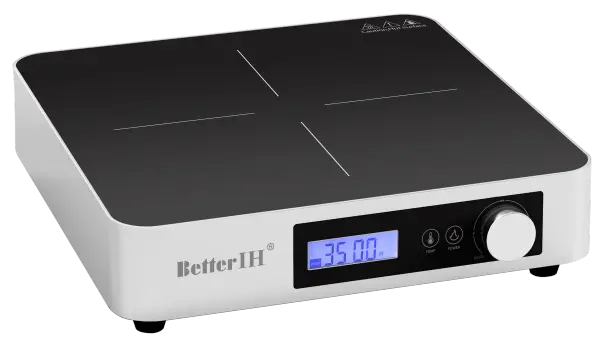
We develop commercial induction equipment with this practical distinction in mind. Our 3500W commercial range includes multiple configurations, including models under the Sleek Knob and Metal Design categories, giving buyers more than one way to integrate this power level into a professional workspace.
What Does 3500W Mean in a Commercial Kitchen?
A 3500W rating describes the electrical power level associated with the cooker. For a kitchen manager, however, the number becomes meaningful only when connected to the job assigned to the cooking station.
Higher-power equipment is generally considered when a station needs responsive heating for active cooking rather than occasional warming. The suitability still depends on the cookware, recipe, operating conditions, and the manufacturer's actual design.
Which Cooking Tasks Suit This Power Level?
A 3500W induction cooker can be considered for stations where staff need a dedicated induction heat source for regular cooking. Examples can include a supplementary cooking position, preparation station, buffet operation, or a workstation that needs an additional burner during busy periods.
The right application depends on the kitchen's workflow. A compact station may prioritize a manageable footprint and straightforward controls, while a production-oriented environment may place greater emphasis on equipment placement and continuous operational access.
Rather than assigning the cooker to every cooking task, we recommend matching it to the workload. A station preparing sauces, heating cookware, or handling smaller batches has different requirements from a high-volume production line. The power rating should therefore be evaluated alongside the cooking vessel and the frequency of use.
How the Cooker Fits Different Kitchen Workstations
Physical configuration can be just as important as electrical rating. Our commercial induction range is organized into categories such as table-top, free-standing, built-in/hidden, drop-in, and heavy-duty equipment. These options show why commercial buyers should consider where the unit will operate before choosing a particular model.
A countertop arrangement can work well when flexibility matters. Staff can keep the cooking unit accessible at a dedicated work surface without redesigning the entire kitchen. Built-in or hidden configurations serve a different purpose, particularly where the equipment needs to become part of a fixed counter or cooking station.
Commercial kitchens also vary in presentation requirements. Buffet service, for example, may call for equipment designed around a serving environment rather than a conventional back-of-house cooking line. Choosing the physical format first can prevent an otherwise suitable power rating from becoming inconvenient in daily operation.
What Should Buyers Check Before Selecting a Model?
The first check should be the actual model configuration. Our 3500W range includes E350S, BE350A, HB350A, HB350A-1, and HB350K5 under the Sleek Knob group, while HBE350C, HBE350K, HBE350F, HBE350I, and BT-350H-1 appear under Metal Design.
That variety matters because buyers should not assume that every unit with the same wattage is interchangeable. Control style, physical construction, installation method, available space, and the intended workstation can influence which version makes sense.
Control preference deserves attention as well. The product range distinguishes a Sleek Knob design from its Metal Design group, giving commercial buyers a concrete configuration difference to examine rather than treating 3500W as the only specification that matters.
Electrical installation should also be verified against the actual model and the kitchen's available supply before ordering. We would not recommend treating the wattage figure as a substitute for checking the complete technical specification, installation requirements, and local electrical conditions.
Where a 3500W Unit Makes the Most Sense
A 3500W induction cooker is most useful when the kitchen needs a dedicated induction cooking point with a substantial power rating but also needs to select the physical format around its workflow.
That could mean adding an extra station during busy service, integrating induction into a fixed counter, or selecting equipment for a buffet or other specialized food-service environment. The manufacturer's product structure supports this broader view by separating countertop, free-standing, built-in, drop-in, heavy-duty, warmer, fryer, wok, and buffet categories rather than presenting one configuration as suitable for every operation.
For distributors and commercial-kitchen equipment buyers, this also creates a more useful evaluation process: start with the cooking task, identify the installation environment, then compare the available 3500W configuration that fits those requirements.
Making the 3500W Decision
A 3500W rating can provide a strong basis for selecting commercial induction equipment, but the number itself does not determine whether a cooker is right for a particular kitchen. The better decision comes from connecting power level with cooking workload, station design, control preference, installation format, and the exact model specification.
Better Induction builds its selection process around real-world application: identify your workstation needs first, then choose the ideal configuration. If you are comparing our available options, our heavy-duty 3500W induction cooker models offer a strong foundation for handling more demanding kitchen tasks.
Keep in mind that a 3500W induction cooker isn't a one-size-fits-all fix for every extra station. Rather, it is a specialized tool that should be chosen only when its output matches the specific cooking workload required by your operation.
GET IN TOUCH
Contact With us