
Pan diameter alone does not tell buyers whether cookware will work well on an induction hob. Some pans have a magnetic center surrounded by aluminum or another nonmagnetic material. The effective induction area may be much smaller.
For a commercial induction cooker, this difference affects pan detection, heating speed, and temperature distribution. Buyers should ask where the magnetic material sits, how much of the base it covers, and whether the pan performs consistently during the intended cooking task.
How Much of the Base Is Magnetic?
Induction coils create changing magnetic fields that generate heat in suitable cookware. Where a pan has only a small ferromagnetic insert, direct induction heating is concentrated in that insert. Heat then spreads through surrounding metal.
Ask the cookware supplier for the diameter of the magnetic insert, not simply the overall pan diameter. A wide pan with a narrow steel disc may behave differently from a pan with a magnetic layer extending across its flat base.
Check whether the magnetic material forms a continuous layer or separate sections. Gaps, decorative patterns, and mixed materials can affect how the pan couples with the induction field. Underside drawings support sample selection.
Will the Hob Detect the Pan Reliably?
Pan detection depends on the appliance design and the cookware's magnetic area. One hob may recognize a partly magnetic base, while another may show a pan error or stop heating. Test recognition on the intended equipment.
Ask for the cooker's minimum compatible magnetic base diameter. This figure can differ from the marked cooking-zone diameter. For a 3500 W induction cooktop, buyers should also confirm whether the tested pan can draw the required heating power under normal operating conditions.
Run repeated tests with the pan centered, then reposition it slightly within the manufacturer's permitted placement area. Record whether heating starts promptly, remains active, or stops unexpectedly. One successful test is insufficient.
What Happens to Heating Uniformity?
Partially magnetic bases can create a hot center and cooler outer areas. Results depend on the magnetic area, pan construction, and food. Stirring can help in some tasks, but it does not remove an unsuitable base design.
For sauces and delicate foods, observe whether ingredients stick or scorch near the center. For water heating, compare the time needed to reach a defined temperature using equal water volumes and the same starting conditions. Record results rather than relying on impressions.
Temperature measurements should use a method appropriate for the cookware surface. Infrared readings can vary with surface finish and emissivity. Where accurate comparisons matter, use a controlled test procedure and document measurement points, pan position, and power setting.
Does the Intended Cooking Task Change the Answer?
Cooking and holding food warm place different demands on cookware. Rapid boiling requires sufficient power transfer, while buffet service focuses on controlled warming. A partially magnetic pan might perform acceptably in one task but struggle in another.
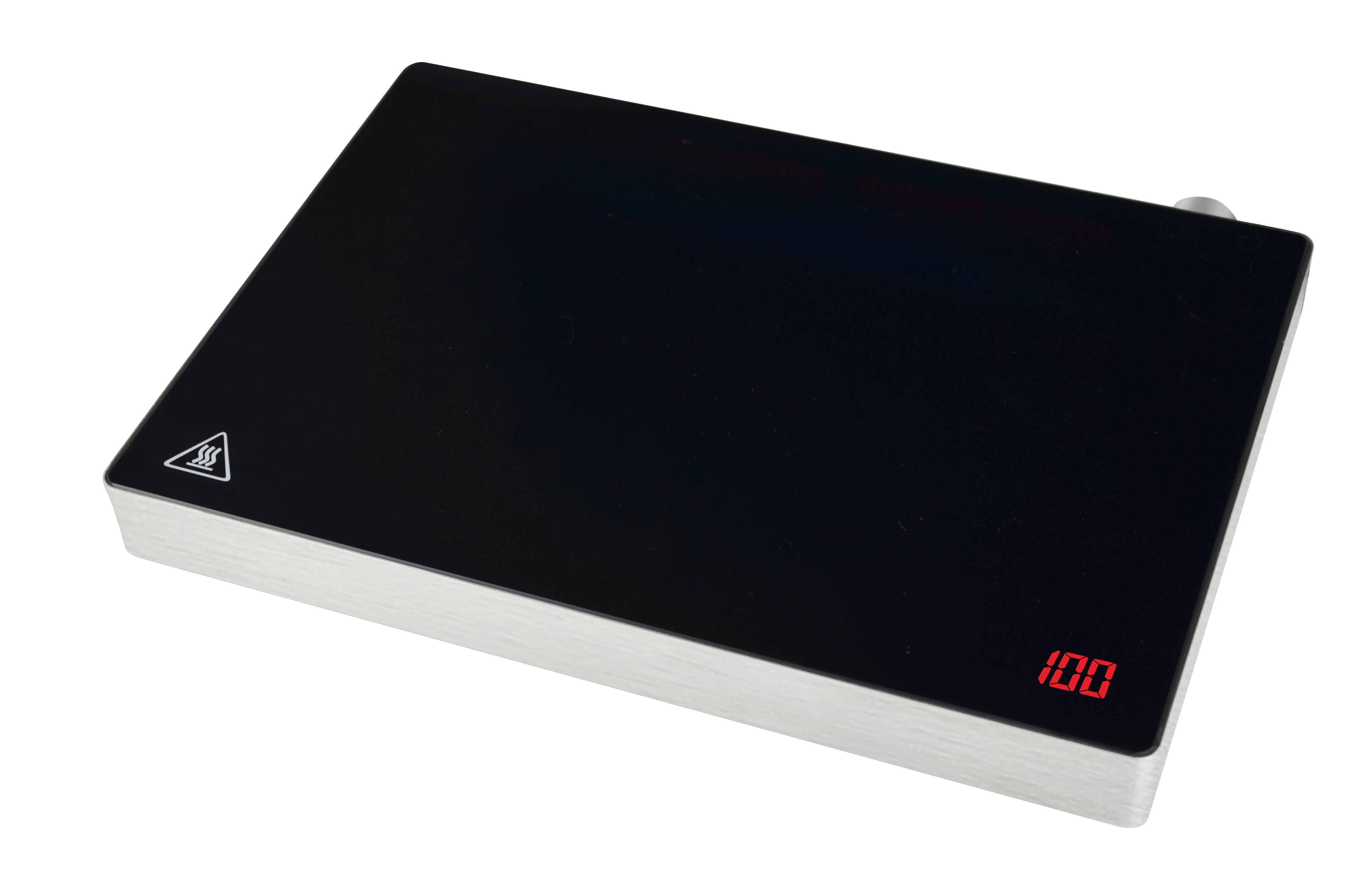
Our BF100A induction warmer is designed especially for keeping food warm. It has a stainless steel body and offers glass hob options including Schott Ceran and Eurokera France. Users adjust temperature by knob, with a temperature display at the right corner of the glass plate and electronic overheating protection.
These features describe the warmer, not guaranteed compatibility with every pan. We recommend checking whether the actual serving vessel is detected and whether its contents remain at the required service temperature. Follow the applicable food-holding rules and verify temperatures with a suitable food thermometer.
Which Tests Belong in a Purchase Review?
Start with a magnet test across several points on the underside. It can reveal where the magnetic layer ends, although attraction alone cannot establish heating efficiency. Measure the flat magnetic area and note whether the pan sits steadily on the glass.
Next, test representative cookware sizes and constructions with the proposed appliance. For a 3500 Winduction cooktop, include normal cooking loads rather than empty pans. Compare heating time, stability, power behavior, and the distribution of heat across the base.
Keep a record of the cookware model, magnetic dimensions, appliance setting, test load, and observations. Photographs can support technical discussions. Buyers should request a repeat test when a supplier changes the pan's base construction.
What Should Be Confirmed Before Ordering?
When reviewing a commercial induction cooker, buyers should request the pan-size limits, detection requirements, and cookware guidance for the exact appliance model. They should also clarify whether testing covers mixed-metal bases rather than only fully magnetic sample pans.
At Better Induction, we develop induction cooking equipment through OEM and ODM projects. We can discuss cookware compatibility during specification reviews, alongside equipment layout and control requirements. Final acceptance should still depend on tests with the intended cookware and operating conditions.
Purchasing teams should document accepted pan types and test results in the project file. This discourages unsuitable cookware substitutions.
Make the Magnetic Area Part of the Specification
Partially magnetic cookware is not automatically unusable, but its actual magnetic area matters more than its advertised diameter. Detection, heat distribution, and cooking performance should be checked together before a bulk order is placed.
At Better Induction, we encourage buyers to share cookware drawings, sample pans, and application details early in the process. Clear evidence from practical testing gives both equipment suppliers and buyers a stronger basis for choosing a suitable induction setup.
GET IN TOUCH
Contact With us