
Fried food can look pale, greasy, or uneven even when the fryer is operating as intended. Water in the food changes the heating process. It absorbs energy during evaporation, delays surface browning, and affects the amount of steam released into the oil. These effects can resemble slow recovery.
A reliable trial therefore needs two sets of evidence: measured product conditions and recorded equipment behavior. Appearance alone cannot reveal the cause. This procedure separates moisture variation from heating performance.
How Product Moisture Changes Frying Results
Water near the surface evaporates rapidly after food enters hot oil. Evaporation absorbs heat, which can slow crust formation. Wet coatings may also shed into the oil. Identical settings can produce different results with wetter samples.
Internal moisture matters later in the cooking cycle. Thick potato pieces, breaded products, and filled snacks release water at different rates. Their structure affects heat transfer. Comparing samples with inconsistent thickness can therefore blur the distinction between differences in moisture and differences in equipment response. Teams should avoid treating the visible intensity of bubbling as a direct measurement of either moisture content or heating power.
We recommend tracking raw weight, finished weight, and the time allowed for draining. Weight loss reflects water loss and possible oil uptake. If moisture content is the central comparison, obtain a representative sample measurement using a defined testing method.
Standardizing Food Preparation Before Testing
Start with food from a documented batch. Record portion weight, piece dimensions, initial temperature, thawing condition, coating thickness, and preparation time. Keep the delay between preparation and loading consistent. Washed potatoes, for example, should follow the same draining procedure in every run.
When testing an induction fryer, hold batch mass, basket loading, cooking duration, and oil volume constant. Avoid tightly packing one basket while spreading another batch loosely. Differences in product arrangement change oil circulation and can influence cooking results independently of the equipment's heat source.
Moisture measurements should distinguish surface water from water within the food where the testing method allows. Label samples before cooking and keep their records linked to individual runs. Otherwise, texture differences become difficult to explain.
Which Equipment Measurements Reveal Heating Differences?
Oil temperature must be recorded before loading and throughout the cooking cycle. Capture the lowest observed temperature, recovery time, and temperature near unloading. A suitable independent temperature probe can help compare actual oil conditions with the setting or display used by the operator.
Keep oil type, working oil level, filtration routine, and starting temperature unchanged. Oil degradation and food residue can affect color and flavor. Record oil replacement and filtration times for reliable comparisons.
Temperature curves deserve attention because matching final readings can hide different responses after loading. However, a larger temperature drop does not automatically indicate weaker equipment. A wetter product may remove more heat through evaporation. Check product records alongside temperature traces. Where available, record the time needed to return to the chosen operating range rather than relying only on the lowest reading.
Separating Moisture Effects from Equipment Performance
Use controlled comparisons rather than changing food and equipment together. First, cook repeated samples from one prepared batch on the same unit. Next, test a batch with a documented moisture difference while maintaining the operating settings. This shows how product variation affects color, texture, and temperature.
To assess equipment effects, repeat the comparison with closely matched food samples and equivalent operating conditions. Rotate the test order where practical so later runs do not consistently favor one unit. Record preheating, waiting periods, and operator adjustments. Link every run to its sample and equipment log. Where two units are compared, use the same measurement location and probe procedure to reduce measurement-related variation.
Interpret results through linked evidence. If color varies while temperature traces are similar, investigate food moisture and preparation. If matched samples produce different recovery curves, investigate heating response and control behavior. When moisture and recovery both differ, the cause remains uncertain; run another controlled comparison before assigning responsibility.
The Role of Product Design in Trial Consistency
For induction appliance engineering, operator settings and the available display information are part of a repeatable test procedure. Teams should record the selected mode, setpoint, and adjustments made during cooking. Displayed values are not independent measurements.
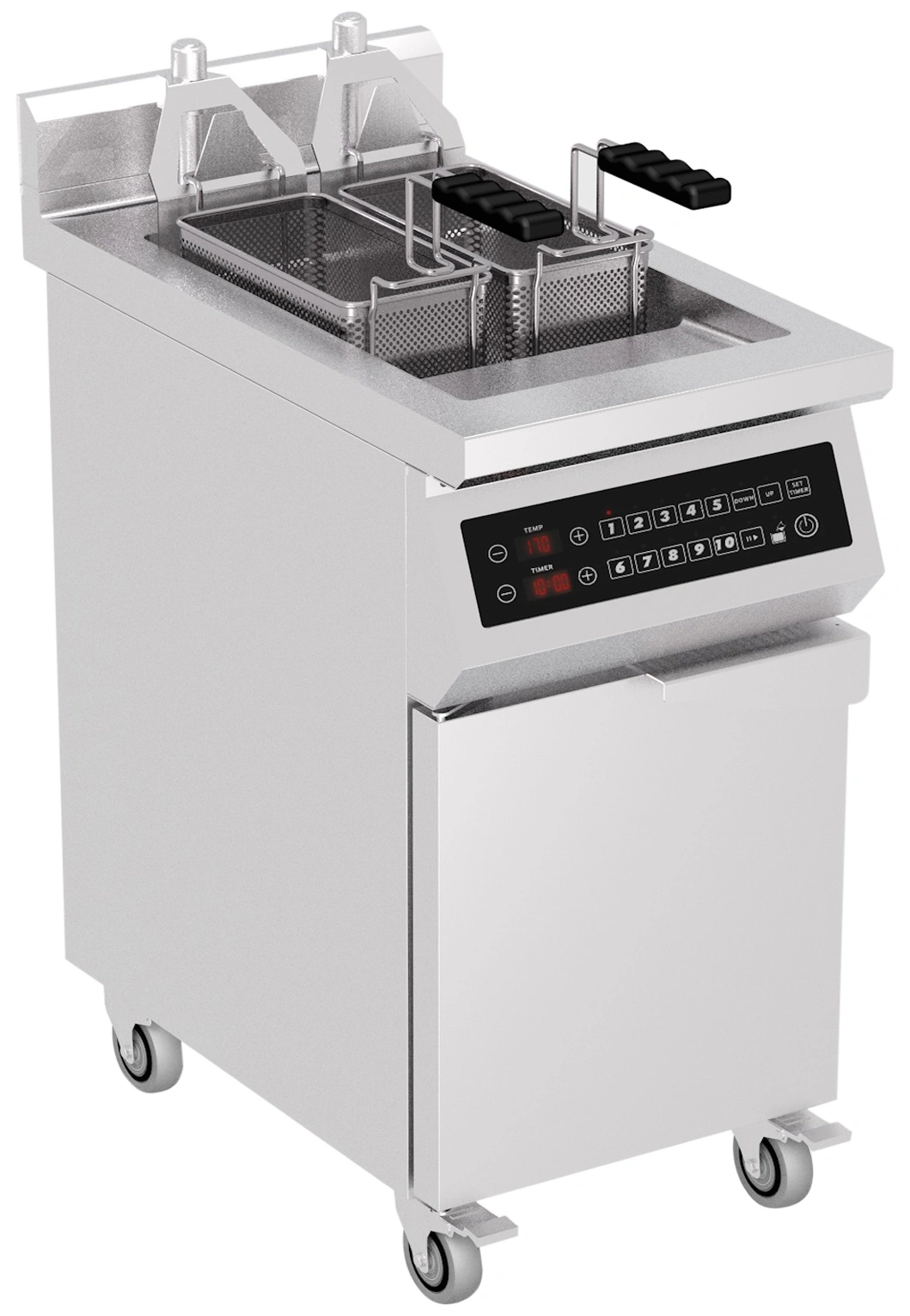
Our EWLM500A-D400-H7-LF has a stainless steel body, touch control, and an LED display. These specifications describe its construction and interface, not verified frying capacity or temperature recovery. Heating claims require verified applications and test results.
At Better Induction, we develop induction cooking equipment through ODM and OEM projects. We can discuss how test records fit into design reviews and customer evaluations. Separate specifications, observations, and measured performance.
What Should the Final Trial Report Establish?
A useful report brings moisture measurements, sample preparation, oil-temperature curves, and finished-product results into one record. For a second induction fryer trial, we recommend keeping matched samples separate from deliberate moisture-change tests. In induction appliance engineering reviews, this distinction also prevents interface details from being mistaken for proof of cooking performance.
At Better Induction, we encourage customers to document unresolved differences before approving a configuration. Clear records help determine whether the next step is tighter food preparation, additional temperature measurement, or another equipment comparison. The purpose is not simply to identify which run looked better, but to establish why the results changed.
GET IN TOUCH
Contact With us