
Two kitchens can heat the same pan with similar settings yet report different cooking temperatures. The difference may come from where each temperature sensor sits, rather than from the food or the heating equipment. Without a defined measurement point, temperature figures can be misleading.
For a commercial induction cooker, reported temperature may refer to the pan base, cooking oil, food surface, or a sensor inside the appliance. These locations do not heat or cool at identical rates. We need to identify the measured surface before comparing results.
What Is the Sensor Actually Measuring?
Temperature belongs to a specific location and moment. A probe touching the center of a pan base measures a different condition from one suspended in oil. Neither reading automatically represents the entire cooking area, especially when ingredients cover only part of the pan.
Contact also changes the reading. Loose contact can leave an air gap between the probe and metal. Pressure, attachment method, and probe size affect how closely the recorded value follows surface changes. Test reports should describe how the sensor was secured.
Built-in appliance sensors may sit beneath the cooking surface instead of touching the pan. Their readings can support control functions, but they should not be presented as direct food temperatures. For external testing, we distinguish the control sensor from the independent measurement probe.
Why Distance from the Heat Zone Matters
Induction heats compatible cookware through electromagnetic coupling. Heat then travels across the metal and into the food. Because heat distribution takes time, the pan center and outer edge may show different temperatures during rapid changes in power.
We recommend placing measurement points at defined distances from the center when examining pan uniformity. This reveals whether one reading reflects a local hot area or a broader trend. The same point layout should be used across repeated tests.
Pan geometry adds another variable. Curved sides, thick bases, and differences in material construction influence heat movement. A probe near the wall may respond differently from one on the flat base, even when both sensors are functioning correctly.
Cooking load matters as well. Cold ingredients can draw heat from the contact area, while an exposed section of the pan remains hotter. Measurements taken beside the ingredients may therefore exaggerate the temperature experienced by the food.
How Probe Depth Changes Liquid Readings
Oil and water introduce another measurement problem: temperature varies with depth and movement. A probe close to the vessel bottom may record a faster rise than one placed near the surface. Stirring and natural convection can narrow these differences, but not instantly.
For boiling trials, we recommend specifying probe depth and distance from the vessel wall. When a probe touches the metal bottom, it may measure the vessel rather than the liquid. Keeping it clear of the bottom helps separate these two conditions.
Frying tests require similar care. Oil temperature may drop sharply after food enters, then recover as heating continues. Recording the probe position and sampling interval makes the recovery curve easier to interpret. One peak number cannot describe the full cycle.
When comparing equipment, we recommend keeping vessel fill level, starting temperature, probe depth, and food load consistent. Those controls reduce differences unrelated to heating performance. The resulting data is more useful for practical kitchen decisions.
Does the Display Match an External Probe?
Digital displays are convenient, but their temperature values may come from internal sensing or control calculations. The displayed setpoint is not necessarily a measured pan temperature. Testers should check which value the display represents before treating it as evidence.
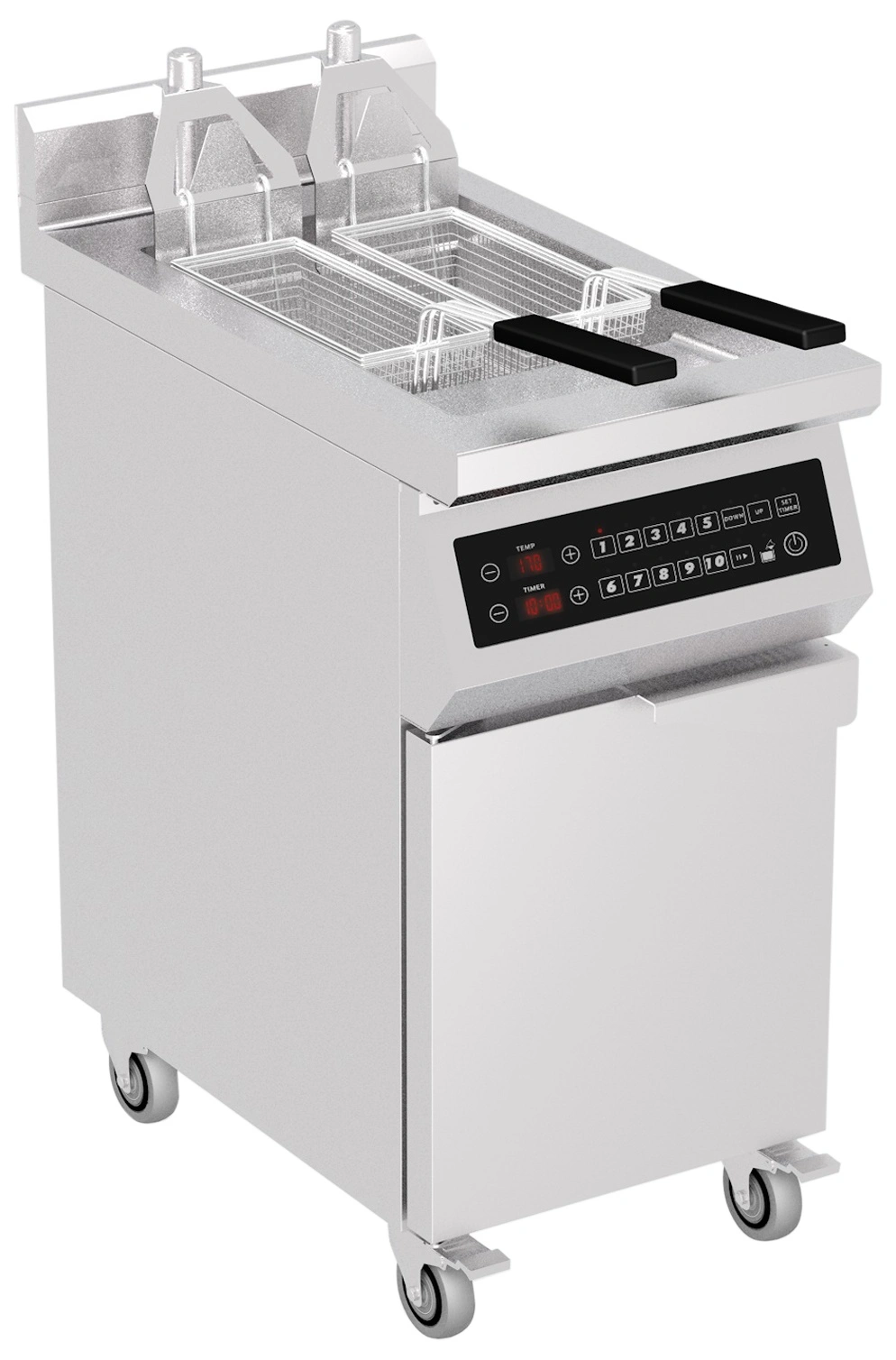
Our EW100Z-T-H7-LF model features a stainless steel body, touch control, and an LED display. These are its stated product features. They do not, by themselves, establish where temperature is measured or what temperature value the display shows.
When evaluating a commercial induction cooker, we recommend documenting the selected cookware, sensor location, attachment method, and heating sequence before comparing reported temperatures. This approach helps separate actual cooking conditions from differences in measurement methods.
The same principle applies to feedback timing. Probes fixed to metal can react differently from those immersed in food. If testers record values at different moments after a power adjustment, the comparison may reflect sensor response rather than equipment behavior.
What Should a Repeatable Trial Record?
Practical test records should include a diagram showing the pan and probe positions. Probe type, calibration status, cookware dimensions, liquid volume or food mass, and initial temperature also belong in the record. These details help another team reproduce the trial.
Next, record the power setting, time stamps, stirring schedule, lid position, and when ingredients are added. Plotting readings over time is more informative than quoting a single maximum temperature. Repeated runs can reveal whether differences persist.
For induction cooker manufacturers, clear test conditions support discussions with kitchen equipment brands and purchasing teams. At Better Induction, we provide ODM and OEM services covering product design, development, and manufacturing. These services allow us to discuss measurement requirements alongside the intended cooking application.
Reliable Comparisons Start with Clear Measurement Points
Sensor placement changes reported cooking temperatures because heat is distributed unevenly across cookware, liquids, and food during cooking. Position, contact, depth, and recording time all influence what the instrument observes. Comparisons become more meaningful when these conditions are documented.
At Better Induction, we encourage customers to define cooking tasks and measurement points before reviewing results. This helps induction cooker manufacturers discuss performance requirements using repeatable trials rather than isolated temperature figures. Clear testing methods also support more informed equipment selection.
GET IN TOUCH
Contact With us