
A commercial induction cooker does not heat a pan by transferring heat from a flame or a red-hot element. It converts electrical power into a high-frequency magnetic field, then uses that field to generate heat inside compatible cookware. For buyers, that sequence matters because the power electronics, coil, cookware interface, and cooling system affect equipment fit.
Electrical Power Becomes High-Frequency Current
Power entering an induction unit cannot simply be sent to the cooking coil at normal mains frequency. A typical system converts incoming AC into DC, then creates high-frequency AC for the resonant heating circuit. IGBTs commonly act as switching devices in induction designs. The resulting current energizes the induction coil.
That conversion stage is important in commercial induction cooking equipment because the controller must regulate switching behavior and deliver controlled heating output. Common circuit topologies include single-IGBT, half-bridge, and full-bridge arrangements.
The Coil Creates the Magnetic Field
Copper coil geometry sits at the center of the heating process. High-frequency current flowing through the coil produces an alternating magnetic field above it. The field passes through the glass-ceramic cooking surface and interacts with the metal base of suitable cookware.
The coil does not heat the pan like a conventional element. Instead, cookware becomes the location where electrical energy turns into thermal energy. A changing magnetic field induces electrical currents in conductive cookware, and resistance within the metal produces heat.
Cookware Completes the Heating Circuit
A buyer can specify high power and still experience poor heating if the cookware is unsuitable. Induction requires cookware that can interact effectively with the magnetic field. Ferromagnetic materials such as cast iron and suitable magnetic stainless steel are commonly used.
Pan geometry also matters. The magnetic field needs effective coupling with the heated area, so the cookware base should suit the coil and intended task. We therefore regard cookware as part of the heating interface, not merely an accessory purchased separately.
How the Cooker Changes Heating Output
Power regulation happens electronically rather than through a gas flame. The control system adjusts operation of the high-frequency power circuit to change the energy delivered to the coil. In resonant induction designs, switching behavior can be controlled in relation to the circuit’s resonant condition, providing output regulation.
For buyers, the practical lesson is that a wattage number does not tell the whole story. A cooker designed for continuous wok frying has different requirements from equipment intended for buffet holding or programmable batch cooking. Duty and cooking process should guide selection.
Cooling Protects the Power Electronics
High-power switching electronics generate heat during operation. Commercial units therefore need thermal management alongside the induction circuit. Cooling components and airflow paths manage heat around the electronics.
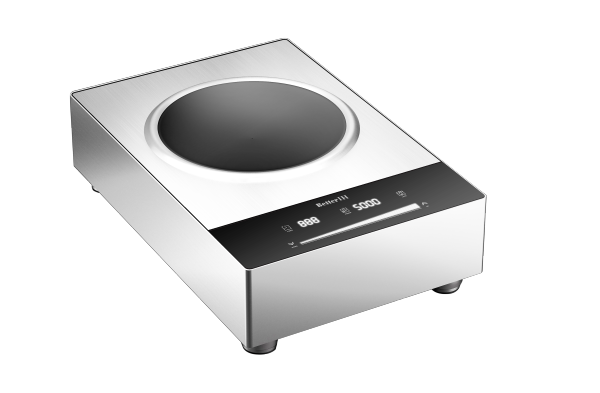
Our commercial range illustrates why physical configuration is tied to application. It includes table-top, free-standing, built-in or hidden, drop-in, heavy-duty, induction fryer, induction warmer, buffet station, and grand induction wok formats.
These formats share the same electromagnetic principle, but their layouts and operating requirements differ. Buyers should evaluate the complete configuration rather than power rating alone.
How We Apply the Principle to Commercial Designs
At Better Induction, we evaluate the complete chain: electrical conversion, switching control, resonant heating, cookware coupling, user controls, and thermal management. Treating the coil as the entire product would overlook the systems that determine how the equipment operates in a commercial environment.
Better Induction’s commercial lineup is tailored to diverse operational needs. High-output 3500W models are engineered for heavy-duty wok frying and rapid boiling, while programmable automatic units feature precise time-temperature controls ideal for batch cooking, simmering, and sauce preparation. Additionally, our rugged heavy-duty series incorporates reinforced coils, impact-resistant surfaces, and advanced thermal management to withstand the rigors of demanding professional kitchens.
That distinction matters when sourcing commercial induction cooking equipment for OEM or private-label projects. We would match the electrical design and physical configuration to the cookware, cooking process, duty cycle, installation format, and operator workflow rather than treating one platform as universal.
What Buyers Should Check Before Ordering
Understanding the working principle creates a practical purchasing checklist. First, confirm electrical input and installation conditions. Next, identify cookware material and base dimensions. Then ask how the supplier controls power and manages electronic heat.
Physical format deserves equal attention. A countertop machine, built-in unit, drop-in module, buffet station, and wok system can all use induction while serving very different workflows.
For an OEM or ODM project, we would also define the control interface, enclosure format, cooking modes, and installation requirements before design approval. Better Induction approaches these decisions around the intended professional cooking application, helping buyers specify equipment according to how it will actually be used.
The Buyer’s Real Decision
The operating sequence is straightforward: electrical power is converted and controlled, high-frequency current energizes the coil, the coil creates an alternating magnetic field, and that field induces currents in compatible cookware that become heat. Supporting systems control and protect the process.
The useful question is therefore not simply whether induction “heats the pan directly.” The stronger evaluation asks whether the electrical architecture, coil, cookware interface, controls, cooling strategy, and physical format match the intended commercial duty.
These factors help you choose a commercial induction cooker based on its overall fit, not just its wattage. We align the equipment configuration with the buyer’s cooking workflow and installation requirements.
GET IN TOUCH
Contact With us