
Busy commercial kitchens often prepare foods with different ingredients, cooking requirements, and flavor profiles. Using one fryer vat for every product can create operational problems. Crumbs, seasonings, and cooking residues may transfer between batches. Separate fryer vats provide a practical way to organize frying tasks while maintaining consistent production routines.
For restaurants, hotels, and catering businesses, a commercial induction fryer with separate vats can support menu segregation. Different foods can be assigned to dedicated cooking areas. This arrangement helps kitchens manage product quality, cleaning schedules, and order preparation during busy service periods.
How Separate Vats Support Menu Organization
Menu segregation starts with assigning food categories to specific frying areas. Fish, chicken, potatoes, and breaded vegetables may require different handling procedures. Separate vats allow kitchen teams to establish dedicated cooking stations for selected products. This reduces unnecessary mixing of food residues during normal operations.
Oil management also becomes more organized. Different ingredients release crumbs, coatings, and seasonings into cooking oil. When products share one vat, these residues may affect later batches. Dedicated vats help operators maintain separate oil conditions according to the foods being prepared.
Kitchen managers should establish clear product assignments before service begins. Written station instructions can identify which foods belong in each vat. Staff training and visible equipment labels help maintain these arrangements during shift changes and busy periods.
Reducing Flavor Transfer Between Fried Foods
Flavor transfer occurs when residues from previously cooked foods affect later products. Strongly seasoned coatings, seafood particles, and other ingredients can change the taste or smell of cooking oil. Separate vats reduce direct contact between these residues and foods assigned to another cooking area.
This distinction is particularly useful for restaurants serving varied menus. Fried seafood and potato products, for example, may benefit from separate oil supplies. Kitchen teams can monitor oil condition independently rather than replacing or filtering all cooking oil according to one shared schedule.
However, separate vats do not automatically prevent allergen cross-contact. Shared utensils, baskets, preparation surfaces, and filtration equipment can still transfer allergens. Kitchens making allergen-related claims must assess their complete procedures. Dedicated vats alone cannot establish that prepared foods are allergen-free.
What Changes During Busy Service Periods?
Order timing becomes more manageable when different food categories have assigned cooking spaces. Staff can prepare separate products without repeatedly changing the contents of one vat. This arrangement may reduce interruptions caused by removing residues or waiting for another product category to finish cooking.
Temperature requirements also deserve attention. Different foods may need different frying temperatures and cooking durations. Independently controlled vats can support separate temperature settings where the equipment provides that function. Buyers should verify each model's control arrangement rather than assuming every multi-vat fryer offers independent heating.
Production capacity still depends on vat dimensions, working oil volume, heating performance, and basket configuration. Separate vats do not necessarily increase total output. Kitchen managers should compare expected batch sizes with actual equipment capacity before deciding how many frying compartments their menus require.
Equipment Features That Affect Daily Operations
Vat layout affects daily workflow. Operators need sufficient access for loading baskets, checking food, and removing cooking residues. Equipment placement should also provide practical space for preparation trays, drainage containers, and cleaning tools. These details influence whether menu segregation remains convenient during regular service.
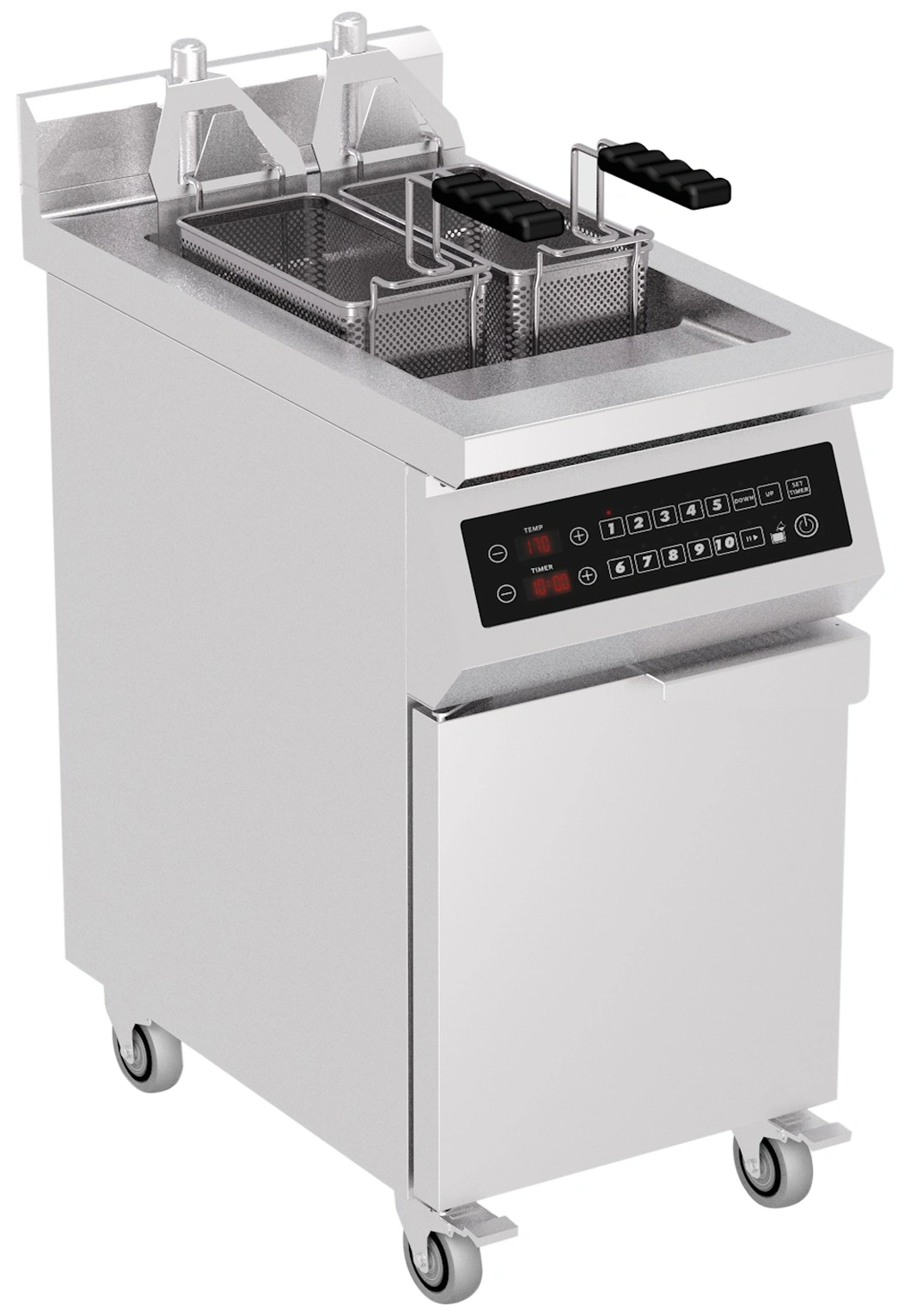
Control design is another consideration. Clear operating information helps staff identify equipment settings and monitor cooking activities. For example, our EWLM500A-D400-H7-LF features a stainless steel body, touch control, and an LED display. Buyers should evaluate these features alongside the specific equipment configuration required for their kitchen operations.
When reviewing a commercial induction fryer, procurement teams should also examine cleaning access and oil handling procedures. Separate vats require appropriate draining, filtering, and maintenance routines. The equipment layout should allow staff to complete these tasks without disrupting neighboring cooking stations unnecessarily.
Planning Dedicated Frying Areas for Different Foods
Kitchen planning should begin with the actual menu. List products according to their ingredients, coating types, cooking temperatures, and expected order volumes. This information helps determine which foods need dedicated frying areas and which products can reasonably share cooking equipment.
For brands developing commercial kitchen equipment, induction OEM services can support discussions about equipment layout, control design, and intended applications. At Better Induction, we provide design, research, development, and manufacturing support for induction cooking equipment. Our product categories include induction fryers and other commercial cooking solutions.
Before confirming equipment specifications, buyers should document working oil requirements, basket arrangements, cleaning access, and available kitchen space. These details help manufacturers understand the intended operating conditions. Practical testing with representative menu items can reveal workflow difficulties before equipment configurations are finalized.
Making Menu Segregation Practical
Separate fryer vats support clearer food assignments, more organized oil management, and reduced flavor transfer between selected products. Their value depends on suitable equipment specifications and consistent kitchen procedures. Staff training, cleaning practices, and proper utensil separation remain important parts of effective menu segregation.
At Better Induction, we offer induction OEM services for kitchen equipment brands seeking customized induction cooking products. We encourage buyers to share their menu categories, expected cooking volumes, and operating requirements when discussing equipment development. These details provide a practical starting point for evaluating fryer configurations and kitchen workflows.
GET IN TOUCH
Contact With us