
Small fried foods create a particular challenge for commercial kitchens. Pieces such as diced potatoes, small seafood, and bite-sized vegetable portions may slip through wide basket openings. Fine mesh can retain them, but closely spaced wires may also change how oil moves around a loaded basket.
Basket selection therefore affects more than whether food stays inside. It can influence product separation, oil drainage, cleaning time, and portion recovery. When evaluating an induction fryer, kitchen equipment buyers should examine the basket alongside heating performance rather than treating it as a minor accessory.
Mesh Opening Size and Product Retention
Mesh openings must be considered against the smallest dimension of the food, not merely its average length. Thin strips and irregular pieces can rotate during frying. Even when their longest side exceeds an opening, their narrow side may pass through it.
Product shrinkage also deserves attention. Moisture loss changes dimensions during cooking, particularly for vegetables and lightly coated ingredients. Buyers should test the smallest expected pieces both before and after frying instead of relying only on raw sample measurements.
Very fine openings can retain crumbs and broken coating that would otherwise fall into the oil. This may reduce visible product loss, yet retained fragments can continue cooking in the basket. Operators need a practical way to remove them between batches. This matters during repeated service cycles, when trapped crumbs can darken while fresh portions are still cooking.
How Mesh Structure Affects Oil Circulation
Open area matters as much as individual hole width. Two baskets with similar openings can have different wire thicknesses and different total open areas. These differences affect how readily oil passes through the basket as food is lowered or lifted.
Packed portions restrict circulation further. Small pieces can settle into a dense layer, especially when loaded quickly. If the basket is too full, portions near the center may heat differently from those near its edges. Mesh selection cannot compensate for excessive batch weight.
Fine mesh does not automatically mean slower cooking. Results depend on basket construction, food load, oil temperature, and agitation. During trials, we recommend comparing equal portions at consistent starting temperatures and recording both cooking time and color uniformity.
Can Basket Mesh Affect Clumping and Texture?
Small battered items may stick where wet coating contacts basket wires. Closely spaced contact points can create more places for coating to adhere. Wider openings reduce some contact surfaces but increase the possibility of pieces falling through.
Gentle separation early in the cooking cycle may help, provided food safety procedures and product characteristics permit it. Operators should also observe whether loose batter accumulates in the mesh. Residue can block openings and change drainage during successive batches.
Texture should be assessed after a consistent resting period. Comparing one sample immediately after lifting with another several minutes later makes the result unreliable. Record crispness, visible oil, coating damage, and the number of pieces stuck to the basket.
Drainage Performance and Cleaning Requirements
Once a batch leaves the oil, trapped liquid must escape through the openings. Small openings may hold droplets between wires, while thick piles of food can obstruct the drainage path. Basket angle, lift height, and drain duration also change what remains on the product.
Set a fixed draining interval for each comparison. Weigh the cooked portion only after using the same lift and resting procedure. Weight differences alone cannot establish oil absorption because moisture loss and food fragments also affect the measured mass.
Cleaning trials are equally useful. Check how long it takes to remove crumbs from corners, seams, and mesh intersections. Food trapped in these areas may accumulate across service periods. Basket material and construction should also suit the kitchen's approved cleaning procedures. Teams can photograph the mesh before and after washing to identify areas that repeatedly retain food particles.
Key Factors in Equipment and Basket Selection
Basket selection should be reviewed with the fryer's operating sequence. For example, an automatic lifting function can make lift timing more repeatable, but it does not establish whether the mesh retains small pieces or drains them effectively.
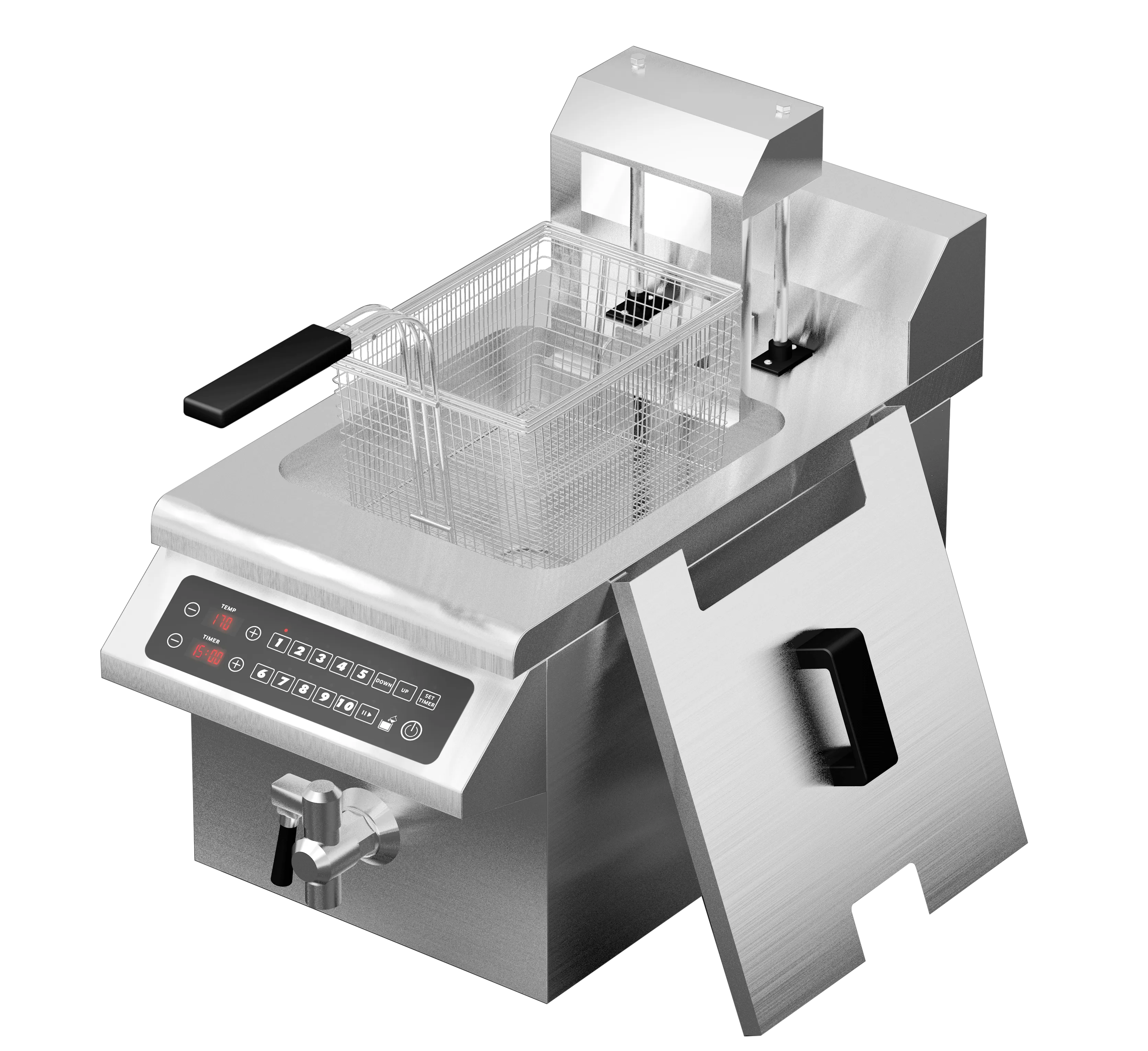
Our E350Z8I model includes a stainless steel body, auto-lift function, touch control, and electronic overheating protection. At Better Induction, we consider basket suitability part of application discussions. These features describe the equipment; basket opening dimensions and compatibility still require confirmation for the intended food products.
For brands comparing induction cooker suppliers, practical trial requests should specify minimum piece size, batch weight, coating type, oil temperature, basket dimensions, and cleaning expectations. Shared test conditions help teams separate basket effects from differences in operator technique or equipment settings.
How Can Buyers Test Basket Suitability?
Prepare representative samples, including the smallest pieces likely to enter production. Run matched batches using candidate baskets, keeping load weight, oil temperature, cooking duration, and lifting procedure consistent. Note product loss, sticking, uneven color, and residue caught in the mesh.
Repeat each comparison to check whether the results remain consistent. Better Induction can discuss these trial observations with customers planning OEM or ODM equipment. When reviewing an induction fryer with induction cooker suppliers, buyers should request documented basket specifications before approving a configuration for small fried products.
GET IN TOUCH
Contact With us