
Changing a power setting is simple for the operator, but measuring the result requires careful timing. An induction cooker may adjust its electrical output quickly while the pan and its contents respond more gradually. Without separate measurements, a test can confuse control response with changes in cooking temperature.
For commercial induction equipment, response testing should answer three questions: when did the electrical input change, when did the cooking temperature begin to move, and was that behavior repeatable? Defined starting conditions and consistent instruments make those answers useful for engineering decisions.
Which Response Is the Test Measuring?
The first measurement concerns the appliance rather than the food. Engineers should mark the instant a new setting is selected, then record when the measured electrical input begins to change. This interval describes a control-related response, although input power does not directly equal the heat transferred into the pan. Where practical, include a compatible power analyzer and note the measurement point in the electrical circuit.
The second measurement concerns the cooking load. Temperature sensors can show when the pan or liquid begins to warm or cool at a different rate. This response is slower because cookware stores heat, and heat takes time to move between the pan and its contents.
Tests should also distinguish an upward adjustment from a downward one. When power decreases, water may continue warming because the pan remains hot. Reporting only the time taken to reach a new temperature can hide this continued heat transfer.
Before collecting data, engineers should define the response threshold. For instance, the report might record the time needed for measured input power to reach a specified percentage of its total change. Temperature response should use a separately stated criterion rather than the same number automatically.
How Should the Trial Be Set Up?
Start with cookware of a documented material, base diameter, and mass. Record the amount of water or other test load, its initial temperature, and the ambient conditions. Keep the pan centered in the same cooking zone throughout comparable runs.
Place the temperature sensor at a repeatable location. For water tests, measure below the surface without touching the pan. If stirring is used, maintain the same method across trials. Sensor position and mixing can affect the observed temperature curve.
Record the control action with a common time reference for electrical and temperature measurements. If instruments use separate clocks, synchronize them before testing. Otherwise, a clock mismatch may appear as an appliance delay.
Choose a sampling interval suitable for the behavior under study. Electrical readings may need more frequent capture than water temperature readings. Document the interval so reviewers know whether brief changes could have been missed. Record the instrument models and measurement resolution as well, since these details affect comparisons between laboratories.
What Can Distort the Results?
Cookware differences are a frequent source of variation. Thick bases hold more heat, while changes in material and geometry alter heat distribution. Two pans may show different temperature trends after identical setting changes, even on the same cooking zone.
Initial conditions matter just as much. Tests started with a cold pan should not be compared directly with runs performed immediately after boiling. Residual heat can delay cooling or accelerate the next temperature rise.
Protective behavior must be identified separately from routine control operation. An overheating protection function may reduce or interrupt heating under certain conditions. Such events should be logged, not treated as ordinary responses to a user's selected power adjustment.
Repeat each change several times after restoring the defined starting conditions. For commercial induction equipment, comparing multiple traces can reveal whether an unusual delay is consistent or belongs to a single run. Report the range of observed results instead of relying on one trial. If the traces differ, inspect cookware placement, starting temperature, and recorded control actions before attributing variation to the appliance.
How Do Results Inform Design Choices?
Results should connect to practical cooking tasks. A simmering trial can focus on the effect of reducing power, while a heating trial can examine the response to an increase. Both should report electrical timing and the resulting temperature trend.
In custom induction appliance development, we discuss these measurement goals alongside the customer's cooking process and preferred control arrangement. Defining the load and test criteria early helps engineering teams decide which behaviors need closer evaluation during development.
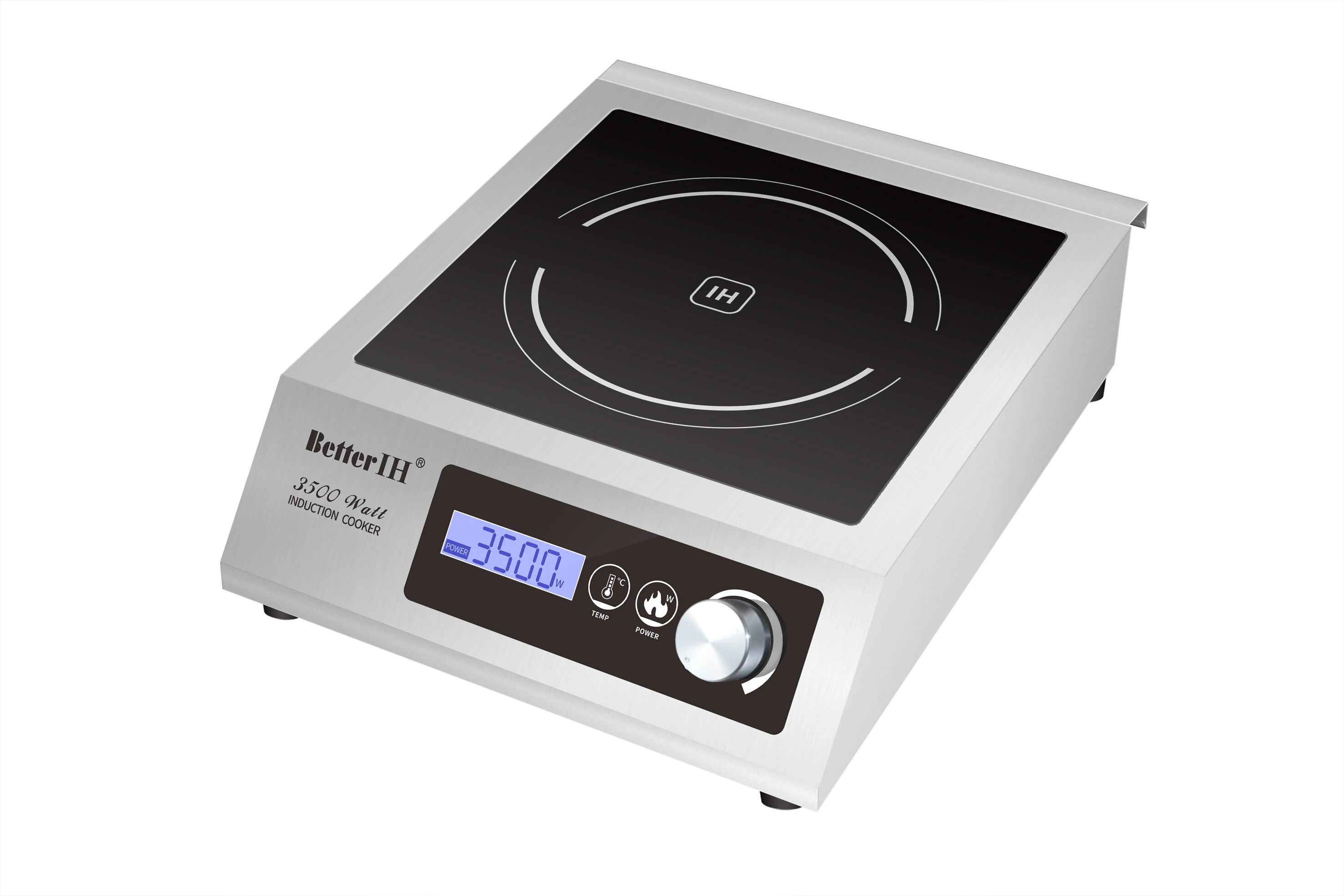
Our Better Induction HB350A provides one example of a configuration that can be assessed. It has a stainless steel body, touch control, an LCD display, and knob adjustment of power or temperature. Its hob options include glass, Schott Ceran, and Eurokera France. The model also uses half-bridge technology and electronic overheating protection.
For this configuration, engineers can log knob movements and displayed selections alongside instrument readings. The display shows the selected setting, but independent measurements are still needed to establish electrical timing and temperature response. Protective interventions should be labeled clearly in the test record.
Turning Measurements into Useful Evidence
A useful report identifies the initial and final settings, cookware, test load, sensor positions, sampling rate, and response thresholds. It should show electrical and thermal results separately, with repeated runs presented under the same conditions. This makes differences easier to interpret and retest.
At Better Induction, we use clearly defined customer requirements to guide custom induction appliance development and related evaluation discussions. The central lesson remains practical: measure the setting change, electrical behavior, and cooking temperature on a shared timeline. Only then can a response test describe what the operator actually experiences.
GET IN TOUCH
Contact With us