
Two fryers may use the same set temperature and cooking time yet produce different food. The difference may come from the oil rather than the heating equipment. Oil age, food residue, and previous cooking cycles can change how heat moves into a product and how the finished food looks and tastes.
For buyers comparing an induction deep fryer with another unit, inconsistent oil conditions can make a trial misleading. A fair evaluation starts with matched oil samples, a defined food load, and records of what happens throughout each run. Otherwise, the comparison may reward an oil condition instead of a fryer feature.
How Oil Age Changes Frying Results
Repeated heating and contact with air gradually alter frying oil. Food moisture, crumbs, and long holding periods also contribute to changes. Darker color alone does not measure oil quality, but visible changes can warn operators to examine the oil more closely before starting another test.
Used oil may produce more foam, stronger odors, or different browning results than fresh oil. These effects can influence how a tasting panel judges the food. If one fryer receives fresh oil and the other receives oil from earlier batches, product differences cannot be attributed confidently to equipment performance.
Oil condition should be documented using the same assessment method for both test stations. Facilities may use total polar material measurements where suitable, alongside operating records and visual observations. Follow the oil supplier's guidance and applicable food safety rules when deciding whether oil remains suitable for use.
The Influence of Crumbs and Moisture
Coating fragments and small food particles can remain in the tank after each batch. Over time, these particles may darken and contribute unwanted flavors. Trials involving breaded products therefore need a consistent schedule for skimming, filtering, or replacing oil between runs. Record which cleaning step occurred before each batch because residue buildup can change rapidly during repeated cooking.
Moisture enters hot oil when frozen or wet food is loaded. The resulting bubbling changes during cooking as water escapes. If the samples differ in initial temperature, surface moisture, or weight, operators may mistake those differences for faster heating or stronger temperature recovery.
Basket practices deserve equal attention. Keep food quantity, loading arrangement, shaking, and removal timing consistent. Record whether loose crumbs collect in particular areas of the tank. Such observations help explain differences in food appearance without assuming the heating system caused them.
The oil's starting level must also match each unit's prescribed working range. Low or uneven fill levels can change immersion and operating behavior. Compare equipment under documented, safe operating conditions rather than forcing identical volumes into tanks with different requirements.
What Should a Controlled Trial Record?
Start each test with the same oil type and a comparable measured condition. Record the amount added, initial oil temperature, target setting, food mass, cooking duration, and time between batches. Where possible, use separate calibrated probes to record actual oil temperature rather than relying only on displayed settings.
Temperature curves help distinguish oil-related variation from equipment response. Note the temperature just before loading, the drop after loading, and the recovery pattern. Repeat runs in a consistent sequence, and avoid judging performance from one batch that may have started with an unusual oil condition. Rotate test order when practical to limit timing bias.
Good induction product design evaluations also consider how users manage oil during routine service. Tank access, controls, and residue handling can affect maintenance practices, even when heating results are similar. These factors should be assessed separately from measured cooking performance so the findings remain clear.
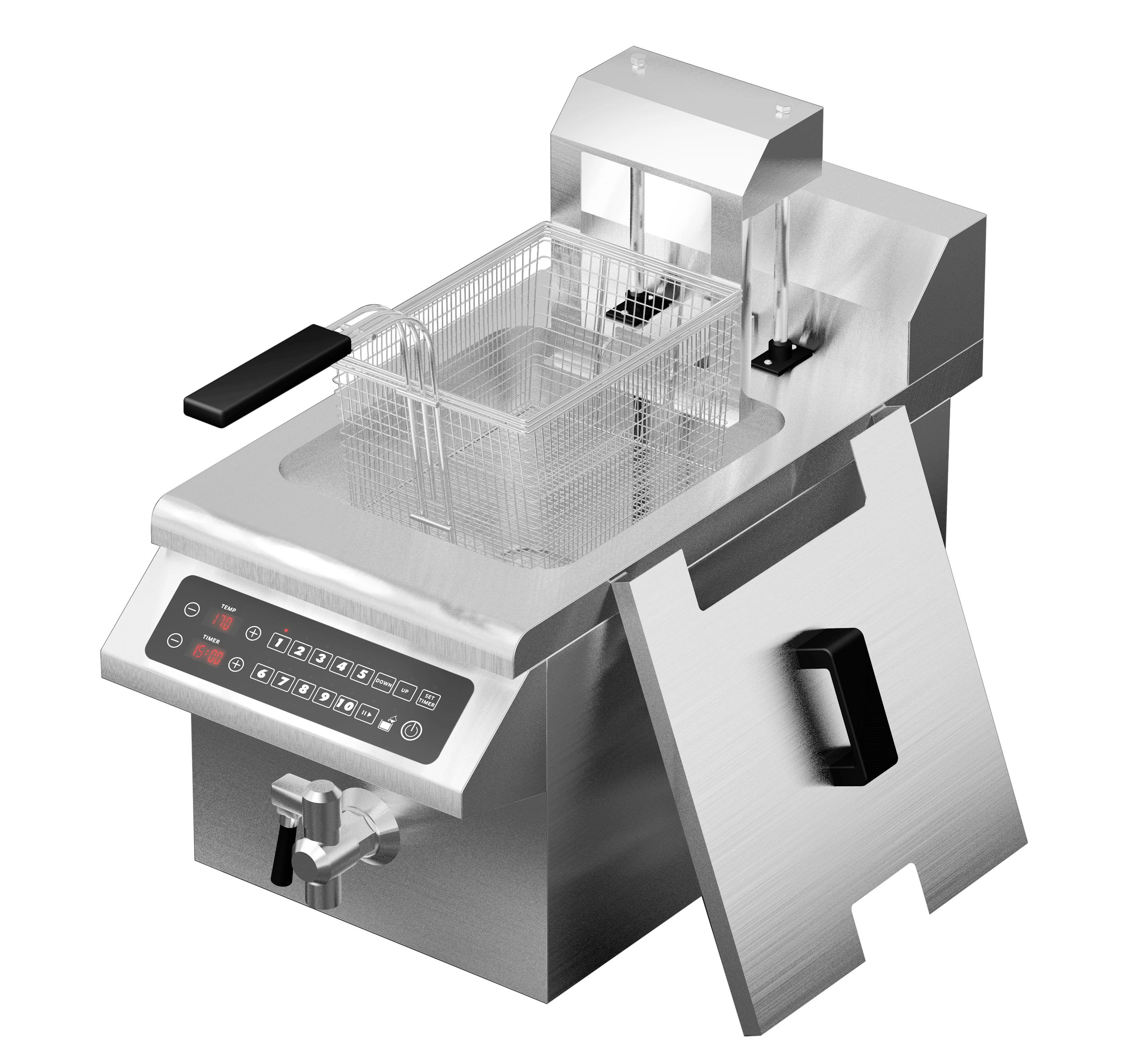
Our Better Induction team approaches comparisons by separating equipment features from trial variables. For example, the E350Z8H includes a stainless steel body, auto-lift function, cold zone, touch control, and electronic overheating protection. These are specified features; their effects on a particular cooking outcome still require representative testing.
Equipment Features and Test Consistency
The auto-lift function may help operators apply a consistent lifting procedure when its settings are held constant. However, comparisons still need the same cooking endpoint and documented basket timing. Different lift settings can introduce another variable, even when the food and oil are matched.
The cold zone provides an area intended for collecting particles away from the main frying region. Its practical contribution depends on tank geometry, residue load, and cleaning practices. Evaluators should record crumb accumulation and oil maintenance rather than assume the feature alone determines oil life.
Touch controls may make settings easier to repeat, but displayed values are not substitutes for independent measurement. Electronic overheating protection addresses a different function from routine temperature control. Neither feature removes the need to monitor the actual oil condition during comparative cooking trials.
For another induction deep fryer comparison, buyers should also review cleaning procedures and how quickly the tank can be prepared for a new test. The goal is not simply matching temperature settings. It is keeping oil history and operating steps comparable across the machines being evaluated.
Making Fryer Comparisons More Reliable
A sound report separates oil observations from heating measurements and finished-food judgments. Include oil age, filtration history, food preparation details, temperature records, and repeated results. If the oil changes substantially during testing, document the change or restart with matched samples before drawing conclusions.
At Better Induction, we view careful test planning as part of induction product design discussions with kitchen equipment brands. Buyers can share their food types, batch sizes, and maintenance expectations so we can discuss relevant equipment configurations. Reliable comparisons begin with controlled oil conditions, not appearances alone.
GET IN TOUCH
Contact With us