
When a pan rocks on an induction hob, its bottom may no longer be flat. Repeated heating, rapid temperature changes, or physical damage can leave the center bowed or the edges raised. Even a small change in shape can alter how the pan sits on glass.
For kitchens using commercial induction equipment, the concern involves more than appearance. Warping can change stability, the spacing above the induction coil, and cooking consistency. Understanding these effects helps operators decide when cookware needs closer inspection.
Two Types of Warping Create Different Contact Patterns
When the center curves downward, the pan can balance on a small central area. Its rim may lift away from the glass, and the pan may wobble during stirring. That movement becomes especially troublesome with hot liquids.
When the center bows upward, the pan may rest mainly on its outer edge. It can appear stable, yet a gap remains beneath its middle. That gap changes the distance between part of the base and the induction coil below.
These patterns depend on the pan's construction and degree of distortion. Thick, multilayer bases may behave differently from thin single-layer cookware. The shape should be inspected rather than inferred from the pan's weight or appearance alone. Even pans of similar diameter can develop different contact patterns after prolonged service.
Does the Glass Need Full Contact to Heat the Pan?
Induction heating differs from a traditional electric hotplate. The induction coil produces an alternating magnetic field that generates heat within compatible cookware. Direct metal-to-glass contact is not the main path for transferring cooking energy.
Still, the distance between the coil and pan matters. Increased spacing can weaken magnetic coupling and alter power transfer. The outcome depends on the cookware material, base geometry, coil arrangement, and the hob's control system.
Warping does not automatically stop heating. Some distorted pans still operate, while others may perform inconsistently or be less reliably detected. No single visible gap measurement can predict behavior across different cooking appliances. The glass itself also adds a fixed separation between the coil and cookware.
That is why a professional induction cooktop should be tested with appropriate cookware under normal operating conditions. The test should consider stability and cooking results, not merely whether the pan becomes hot.
How Warping Shows Up During Cooking
Rocking often appears first. During stirring or tossing, a distorted base can move unexpectedly on smooth glass. Kitchen staff should stop using a pan that cannot sit securely, especially when handling oil or boiling food.
Cooking differences may follow. Operators might observe uneven browning, slower heating, or changing results for a familiar recipe. Such symptoms can also arise from pan materials, portion sizes, and technique, so they cannot establish the cause alone.
Noise is another possible clue, but it is not proof. Induction cookware can hum or vibrate even when flat. Compare a suspect pan with an undamaged induction-compatible pan before attributing unfamiliar sounds to warping.
Simple Inspection Before the Next Shift
Let the pan cool, then clean and dry its base. Set it on a known level surface and apply gentle pressure near opposite edges. Notice whether it rocks or leaves a visible gap beneath the center.
Inspect the bottom for impact damage, discoloration, and separated layers. Do not try to flatten a damaged multilayer base with force. Follow the cookware manufacturer's instructions on inspection, repair, or replacement.
If the pan appears safe to test, compare it with a flat alternative of similar size and material. Use the same hob zone and similar amounts of food or water. Record stability and heating observations without touching hot surfaces.
For buyers specifying commercial induction equipment, including cookware checks in kitchen procedures helps distinguish damaged pans from appliance problems. Staff can then report clear observations instead of assuming the hob has failed. This avoids unnecessary service requests.
Equipment Features Have Limits
Pan condition also affects how operators evaluate controls. Clear settings and readable displays support repeatable work, but neither can restore contact geometry. Overheating protection does not make unstable cookware safe to use.
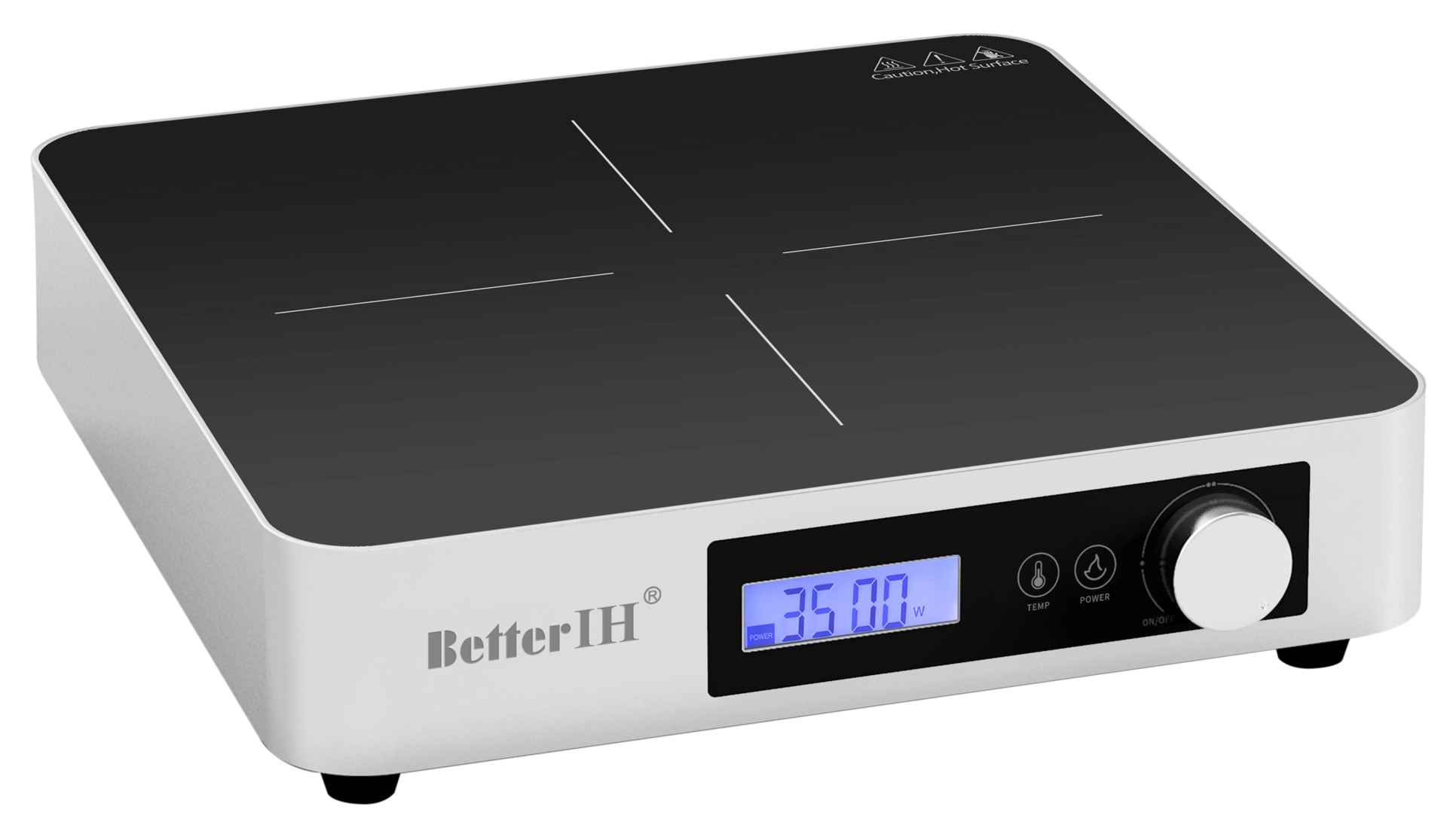
Our E350S illustrates relevant design features. It has a stainless steel body and available glass hob options described as Glass Hob, Schott Ceran Hob, and Eurokera France Hob. Touch control and an LCD display help operators view and manage settings.
The E350S also allows power or temperature adjustment by knob and includes electronic overheating protection. These details concern operation and appliance protection. They do not establish compatibility with every warped pan or guarantee uniform heating.
Our team at Better Induction develops induction cooking appliances and provides OEM and ODM support. When discussing a kitchen project, we encourage buyers to consider cookware condition alongside the requested appliance configuration.
The Practical Decision Is About Stability and Spacing
Warping changes which parts of a pan touch the glass and how far other parts sit from the coil. Induction can work without full surface contact, but excessive gaps and rocking may reduce consistency or create handling concerns.
Choose cookware that sits securely, remains compatible with the cooking zone, and behaves predictably during use. We recommend checking pan condition when evaluating a professional induction cooktop. At Better Induction, we believe stable cookware and appropriate equipment selection should be considered together, rather than expecting electronic controls to correct a damaged pan.
GET IN TOUCH
Contact With us