
Selecting a commercial induction range feels like it should be straightforward: browse specs, pick power output, order. In practice, the decision depends on practical factors that buyers may overlook until the equipment arrives. The equipment may not fit the available space, the electrical infrastructure may not support it, or the configuration may not suit the cooking techniques used in the kitchen. The right choice emerges from working backward: start with your space and workflow, then specify equipment around those realities rather than forcing operations into equipment constraints.
Match Equipment Form to Kitchen Layout
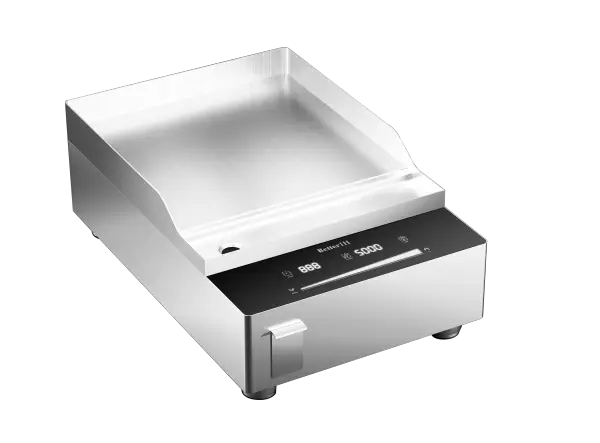
Before any spec sheet, define where this equipment must live. A commercial induction range comes in five distinct architectures: countertop, drop-in, freestanding, built-in, and kitchen island. Each locks you into a different kitchen footprint, electrical access pattern, and upgrade path. Countertop units sit on existing work surfaces and suit temporary or modular layouts. Drop-in models nest into precut openings and are common in renovations where a gas range is being replaced with induction. Freestanding equipment stands alone and requires only floor space and electrical proximity. Built-in units hide below counter level and demand custom cabinetry. Kitchen island configurations serve as central prep stations and require reinforced flooring and overhead ventilation.
Measure your available space first—not after deciding on capacity. An undersized kitchen trying to fit a large-footprint unit wastes money and creates inefficient workflow; oversizing for a small kitchen is equally wasteful. Better Induction's product line spans all these form factors, and the correct choice is determined by what your space physically accommodates, not by what's theoretically ideal. Many kitchen redesigns fail because buyers selected equipment based on desired capacity, then realized the form factor didn't fit existing layouts.
Align Power Specifications to Menu Requirements
Once you know the form factor, power output becomes the variable. Power does not determine cooking speed alone—it determines whether your equipment can sustain multiple simultaneous high-heat tasks. A commercial induction range drawing 3,500 watts per burner works well for operations that cook sequentially: one burner at high heat, another at simmer, moving tasks through equipment in sequence. Operations requiring parallel high-heat work—searing proteins while stock reduces while sauce comes together—need higher per-burner output and multi-burner capacity.
Map this to your menu. Do you sear and finish, or do you braise and stew? Do three burners run simultaneously during service, or do you rotate through them? A fusion restaurant might operate with simultaneous demand; a catering operation might move through cooking stages sequentially. Neither is wrong; both demand different equipment specifications. Heavy duty induction cooker models, for example, are engineered for precisely this kind of sustained simultaneous load, whereas standard ranges assume lighter, intermittent use.
Power specifications also interact with cookware. Induction requires ferrous-based cookware (cast iron, carbon steel, stainless steel with ferrous content). Verify your existing equipment or budget for replacement—incompatible cookware silently fails: pans won't heat, frustration builds, and the equipment gets blamed when the underlying issue is cookware mismatch. Many operations switch to induction only after confirming their existing cookware will work or budgeting for compatible replacements.
Account for Service Workflow and Staffing
Professional cooking is choreography: timing, positioning, and handoff. Introducing new equipment disrupts that choreography unless you've thought through where burners will sit relative to plating stations, ventilation, and prep areas. A commercial induction range is faster and more responsive than traditional ranges, but chefs used to gas heat need training. Induction responds instantly to power adjustments, eliminating the lag time gas cooks expect. This is an advantage—faster response, finer control—but it requires adaptation.
Interview your chef and kitchen team about their workflows before purchase. Do they prefer working at specific burner positions? Do they need multiple stations cooking the same dish simultaneously, or do they move plates through stations sequentially? Do they use specialized cookware or techniques that induction handles differently (wok cooking, for example, requires flat-bottomed carbon steel rather than traditional rounded wok shapes)? These operational details, not wattage alone, determine whether equipment will be embraced or resented.
Better Induction works with professional kitchens to model actual workflows, not theoretical cooking sequences. That collaboration—between equipment specialist and practicing chef—is how installations succeed. Equipment chosen in isolation, no matter how technically sound, can fail if it disrupts established kitchen choreography.
Evaluate Installation and Infrastructure Readiness
Installation costs often dwarf equipment cost, and many buyers discover this after committing to purchase. Commercial induction requires three things: dedicated electrical circuits, often at higher amperage than gas-fired kitchens need; electrical infrastructure (panel capacity, wiring gauges, breaker availability) that may demand expensive upgrades; and ventilation that handles continuous heat output without creating uncomfortable working conditions.
Engage an electrician before purchase to audit your electrical panel and available capacity. A commercial induction range drawing 8,000–10,000 watts on a kitchen panel designed for 15-amp circuits isn't a minor problem—it's a major rebuild. Better Induction can specify exact electrical requirements, but your facility must verify it can deliver. Many kitchen renovations exceed budget because electrical infrastructure was underestimated.
Ventilation matters equally. Induction generates less ambient heat than gas but still requires active ventilation to manage kitchen temperature during heavy service. Undersized ventilation creates a hot, uncomfortable kitchen even if the equipment itself is functioning perfectly. Some facilities discover this too late.
Verify Warranty, Support, and Long-Term Reliability
After specifying equipment, evaluate what happens when it fails. Commercial induction cookers are sophisticated electronics, not simple appliances. Service availability, warranty terms, parts availability, and the manufacturer's responsiveness to issues distinguish good purchases from expensive headaches. Cheap equipment with no local support becomes very expensive when downtime costs accumulate.
Backed by global certifications (CE, ETL, CSA) and comprehensive technical support, we at Better Induction ensure you are fully supported down the road—guaranteeing smooth parts availability, reliable warranty coverage, and clear service documentation if issues ever pop up. Buying from a manufacturer with established distribution networks and service relationships prevents the scenario where a failure occurs, no spare parts are available locally, and your kitchen is down for weeks. Verify these details before purchase, not after discovering a critical component is on a six-month lead time.
Choosing a commercial induction range succeeds when you start with your actual constraints—space, power infrastructure, workflow reality, staffing expectations—then specify equipment around those parameters. Equipment that fits a kitchen perfectly in theory but creates operational friction in practice isn't a success, no matter how impressive the specifications. The right choice emerges from aligning equipment to operations, not forcing operations into equipment.
GET IN TOUCH
Contact With us