
Don't start your induction equipment search with a catalog; start with your cooking tasks. Since different kitchen stations—like wok frying, simmering, boiling, or holding—have unique needs, generic solutions fall short.
By focusing first on operational goals, equipment placement, and live-service habits, we help you pinpoint the right model. This keeps your decision anchored in actual performance rather than chasing high wattage or distracting features.
Define the Cooking Job Before Comparing Models
The first selection question is straightforward: What will the equipment actually be used to cook? A unit intended for continuous wok frying has a different role from one used for simmering sauces or maintaining food at serving temperature.
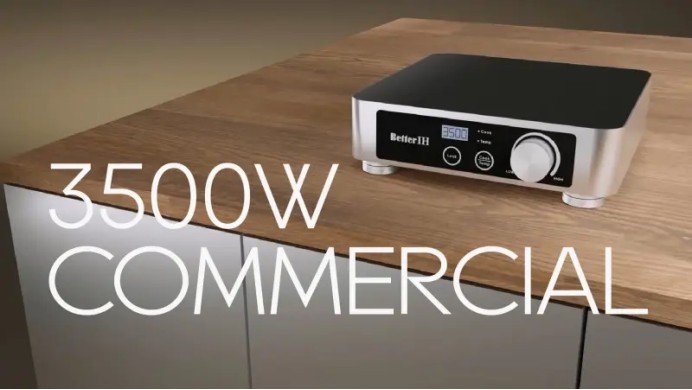
Our commercial range reflects these different cooking requirements. The product categories include 3500W commercial models, automatic commercial induction cooking equipment, heavy-duty equipment, buffet induction appliances, induction fryers, induction warmers, and grand induction woks. Each category addresses a different kitchen task rather than representing interchangeable versions of one appliance.
A buyer should therefore identify the primary task at each cooking station before comparing models. If one station mainly handles boiling and high-volume wok cooking, high-power equipment may be the appropriate starting point. If another station focuses on batch cooking or sauce preparation, programmable time-temperature control may matter more.
Choose the Right Commercial Format for Your Kitchen
Once the cooking task is clear, the next decision is where the equipment will operate. Kitchen layout determines whether a countertop appliance, free-standing unit, built-in system, drop-in model, or another configuration makes the most practical sense.
A countertop design can suit an existing workstation, while a free-standing unit provides a dedicated cooking station. Built-in or hidden configurations can be considered when induction needs to become part of a customized counter. Drop-in equipment offers another integration approach for professional kitchen layouts.
Our commercial product range includes table-top, free-standing, built-in/hidden, drop-in, and cooking-island categories. The correct choice should therefore consider more than available floor space. Counter dimensions, operator movement, equipment access, and the relationship between adjacent cooking stations all affect whether a particular format will work efficiently.
Match Power to the Actual Cooking Workload
Power output is often the most prominent specification, yet blindly selecting the highest rating isn't always the best strategy. The key consideration is how heavily the cooking station will be taxed during regular operation.
A high-volume kitchen, for instance, requires equipment built for continuous wok frying or heavy boiling. High-output units (such as 3500W systems) are specifically engineered for heavy-duty culinary demands, ensuring that workload—rather than raw wattage alone—drives your equipment selection.
Electrical requirements must also be verified prior to ordering. Your facility's power supply must match the specifications of the chosen unit and installation environment. Buyers should always review voltage, phase, frequency, circuit capacity, and related electrical guidelines directly from the model documentation, rather than assuming all commercial units share the same power configuration.
Select Controls Based on How the Kitchen Operates
Control design becomes important once the basic equipment category has been identified. Operators working continuously during service may prioritize quick, direct adjustment, while repetitive preparation can benefit from more structured control.
Our commercial range includes smart-touch equipment, while automatic models are designed around programmable time-temperature control for applications such as batch cooking, simmering, and sauce preparation. The right control method therefore depends on the cooking process rather than on whether one interface appears more advanced.
Consider who will operate the equipment and what adjustments they make most frequently. A station requiring frequent manual changes may favor straightforward controls. A repetitive cooking process may justify programmable functions that reduce the need for constant intervention.
Decide Whether a Specialized Induction Configuration Is Needed
A standard cooking zone is not always the best answer. Some kitchens require equipment designed around a specific task, and choosing the appropriate category can be more effective than adapting a general-purpose unit.
The commercial range from Better Induction includes induction fryers, induction warmers, buffet stations, grand induction woks, and cooking islands alongside standard cooking configurations. A fryer-oriented station, for example, should be evaluated differently from a buffet station whose primary requirement is maintaining food at serving temperature.
Heavy-duty requirements should also be assessed separately. Reinforced coils, impact-resistant surfaces, and robust thermal-management features are identified on our commercial equipment range for heavy-duty applications. These features matter when the operating environment places greater physical or thermal demands on the equipment.
Use a Practical Checklist to Choose the Final Model
At the final selection stage, we recommend reducing the decision to a defined set of questions. First, identify the main cooking task. Next, determine whether the station requires countertop, free-standing, built-in, drop-in, or another configuration.
Then compare the required power with the expected workload and confirm that the electrical installation can support the chosen model. After that, evaluate the control method according to how operators actually cook rather than selecting controls based only on appearance or the number of functions.
Finally, decide whether a specialized category is more suitable than a standard cooking unit. This step can prevent a common purchasing mistake: selecting a general-purpose appliance for a station that actually has a specialized cooking requirement.
Better Induction approaches commercial selection from this application-first perspective. Instead of asking which model has the largest specification, we start by identifying the cooking job, station configuration, workload, controls, and installation conditions.
That method provides a more reliable path to the right commercial induction cooker because every specification is evaluated against an actual kitchen requirement. It also makes it easier to compare commercial induction cooking equipment without treating every professional kitchen as if it has the same workflow.
For buyers sourcing commercial induction cooking equipment, the strongest decision is therefore not necessarily the most powerful or feature-rich model. Better Induction recommends matching the equipment category and configuration to the specific cooking station first, then using power, controls, installation format, and specialized functions to narrow the final choice. The result is a selection based on operational fit rather than specifications in isolation.

GET IN TOUCH
Contact With us