
Cookware compatibility is one of the first questions a commercial kitchen should resolve before adopting induction. Unlike conventional electric heating, induction depends on an electromagnetic interaction between the cooking unit and the cookware. A pan can therefore look perfectly suitable while failing to heat properly.
For buyers evaluating a commercial induction cooker, the critical issue is not simply whether a pot is made from metal. Its base must contain a suitable ferromagnetic material and make appropriate contact with the cooking surface. Once that principle is understood, checking existing cookware becomes much more straightforward.
What Makes Cookware Compatible with Induction?
Induction cooking generates an electromagnetic field that interacts with compatible cookware, creating heat within the cookware itself. ENERGY STAR explains that induction cooking tops require compatible cookware and identifies cast iron, stainless steel, and enameled cast iron among commonly compatible options.
The important detail is the cookware's magnetic response, particularly at the base that sits over the induction coil. A stainless-steel pan is not automatically induction-compatible simply because it is stainless steel. Its specific composition determines whether the electromagnetic system can heat it effectively.
Flat contact is also relevant. The U.S. Department of Energy notes that flat-bottom cookware that attracts a magnet can work with induction. For commercial applications, cookware should therefore be assessed as a complete item rather than judged solely by its material name.
Which Cookware Materials Work Best?
Cast iron is one of the clearest choices for induction because it is ferromagnetic. ENERGY STAR specifically lists flat-bottomed cast iron as compatible cookware. Its suitability makes it a practical option for applications requiring robust cookware, provided the base is appropriate for the equipment.
Stainless steel requires more careful evaluation. Some stainless-steel cookware is magnetic and works with induction, while other grades are not sufficiently magnetic. ENERGY STAR lists stainless steel as a compatible cookware material. However, individual stainless-steel pieces should still be checked for induction compatibility.
Enameled cast iron can also work because the underlying iron provides the magnetic properties required by induction. The enamel coating does not by itself make the cookware incompatible.
Carbon steel is another commonly used magnetic material. The U.S. Department of Energy's induction guidance notes that cookware attracting a magnet can work, while DOE building guidance also identifies carbon steel among materials used with induction.
For a commercial induction cooker, however, material compatibility is only the starting point. The cookware still needs an appropriate base and dimensions for the intended cooking operation.
Which Cookware Materials Usually Do Not Work?
Nonmagnetic cookware is the main problem. Aluminum and copper, for example, do not normally provide the ferromagnetic response required by a standard induction system when used without a suitable induction-compatible base.
The same principle applies to some stainless-steel cookware. Calling a product “stainless steel” does not guarantee induction compatibility because stainless-steel compositions vary.
Glass and ceramic cookware also generally cannot be heated directly by a conventional induction coil unless the product incorporates an appropriate magnetic base. The issue is not that these materials cannot withstand heat; rather, they do not provide the required electromagnetic coupling by themselves.
Commercial kitchens should be particularly cautious about assuming that existing cookware will transfer directly to induction. ENERGY STAR recommends checking cookware compatibility rather than relying on appearance or material labels.
How to Check Existing Cookware Before Buying Equipment
The simplest preliminary test is a magnet. Place a refrigerator magnet against the bottom of the pot or pan. If it sticks firmly, the cookware is likely to be induction-compatible. Both ENERGY STAR and DOE guidance identify the magnet test as a practical way to check compatibility.
That test should be treated as a screening method rather than a complete performance test. A magnetic response indicates that the cookware may work, but it does not establish how efficiently or evenly a particular pan will perform with a particular commercial unit.
Commercial buyers should therefore test representative cookware under actual operating conditions whenever possible. Check the cookware diameter, base flatness, load size, heating response, and stability during use.
This is particularly relevant for large pots and specialty pans. A pan may pass the magnet test but still be poorly matched to the cooking zone or intended commercial application.
What Commercial Kitchens Should Check Beyond Material
Commercial cookware selection should match the equipment's intended job. A small countertop pan, large stockpot, wok, and heavy-duty sauté pan impose different requirements on an induction system.
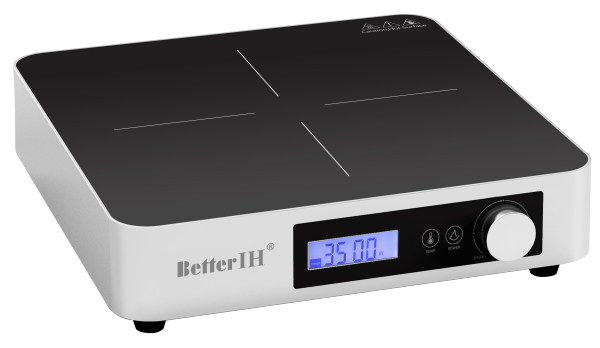
The Better Induction commercial range includes equipment for tabletop, free-standing, built-in, hidden, and drop-in installations, along with heavy-duty induction systems, induction fryers, warmers, buffet stations, and grand induction wok configurations.
That variety makes cookware dimensions important. The base should suit the induction coil and cooking zone, while the cookware's weight and shape should be appropriate for the equipment and cooking task.
A commercial induction cooking equipment specification should therefore be developed alongside the cookware specification. Power, coil configuration, cookware base, vessel size, and intended cooking process all influence the final result.
For OEM projects, we recommend defining the target cookware during equipment development rather than treating compatibility as a post-production check. Better Induction can use the intended commercial application as the starting point when developing the equipment configuration.
Choose Cookware and Equipment as One System
The safest answer to “what cookware works with induction?” is: cookware with a suitable ferromagnetic base, verified for the specific induction equipment and cooking task.
Cast iron, compatible stainless steel, enameled cast iron, and other magnetic cookware can work, while nonmagnetic materials generally require an induction-compatible base. A magnet provides a quick first check, but commercial testing should go further.
For professional kitchens, cookware should never be selected independently from the heating equipment. At Better Induction, we view the cookware, induction coil, power system, and cooking application as interconnected parts of the same setup. That approach is especially useful when specifying commercial induction cooking equipment for high-volume or specialized operations.
The practical decision is therefore simple: verify magnetic compatibility first, then confirm cookware dimensions, base design, and real operating performance against the intended equipment. This prevents a common purchasing mistake—choosing a technically suitable induction unit while overlooking whether the cookware can actually make effective use of it.
GET IN TOUCH
Contact With us