
Breaded chicken, battered fish, and fried snacks can leave crumbs behind after each cooking cycle. Some pieces float near the surface, while heavier fragments settle toward the bottom. When those fragments remain close to intense heat, they may burn and affect subsequent batches.
The cold zone in a commercial induction fryer provides a relatively cooler area where sinking crumbs can collect. Understanding its role helps kitchen teams evaluate oil care, cleaning routines, and fryer construction without mistaking the feature for an automatic filtration system.
How Food Crumbs Settle in Frying Oil
Coating separates from food as steam escapes and baskets move during cooking. Larger fragments usually sink, but fine particles may circulate with the oil. The amount of debris depends on ingredients, preparation, basket loading, and how frequently food is handled. Smaller pieces may take longer to settle because of oil movement.
In a fryer fitted with a cold zone, the lower portion of the vat stays cooler than the main frying region during normal operation. This creates a place where sinking crumbs can remain away from the area used for cooking.
The cold zone does not capture every particle. Some crumbs float, while others remain suspended until the oil settles. Operators still need to skim loose debris and use filtration where the equipment and kitchen procedures call for it.
Cooler Oil Reduces Crumb Scorching
Crumbs contain starches, proteins, and other food solids. Extended exposure to frying temperatures can darken these fragments and eventually burn them. Burnt sediment may contribute unwanted flavors or dark specks to later portions.
By keeping settled debris in a cooler region, the vat can reduce direct exposure to intense heat. However, the cold zone does not stop oil deterioration or make old oil suitable for continued use. Its effectiveness also depends on the actual temperature distribution inside the vat.
Heat, oxygen, moisture, and food residues all contribute to oil degradation. Kitchen teams should monitor oil condition using their established procedures. Crumb control works alongside temperature management, filtration, and timely oil replacement.
Frying Habits Affect Crumb Accumulation
Different foods shed different amounts of coating. Dry breading can release loose powder, while wet batter may break away during loading or turning. Rough basket movements increase the amount of material entering the oil.
Preparation can limit unnecessary debris. Remove loose coating before frying, load baskets within the recommended capacity, and avoid shaking excess breading over an open vat. Consistent portion handling also helps teams compare results between shifts. Staff should follow the same loading method when preparing repeated orders.
During service, staff should remove accessible floating crumbs with appropriate tools. They should also observe whether sediment builds up faster during particular menu periods. These simple observations help set practical cleaning schedules.
What Should Buyers Check Before Purchasing?
Not every induction fryer has the same vat structure. Buyers should request a drawing or clear explanation showing the heating region, the bottom of the vat, and whether a cold zone is present. Induction heating alone does not confirm this feature.
Cleaning access is equally important. Ask how staff can remove settled sediment, whether the vat has a drain, and which filtration procedures the manufacturer recommends. Review the instructions for safe shutdown and cleaning rather than assuming one method suits every model. The location of removable parts can also affect maintenance time.
When comparing proposals from a commercial kitchen equipment supplier, procurement teams can use these questions to evaluate equipment for breaded foods and other crumb-producing menus. The answers matter as much as headline capacity or control features.
Equipment Features and Daily Operation
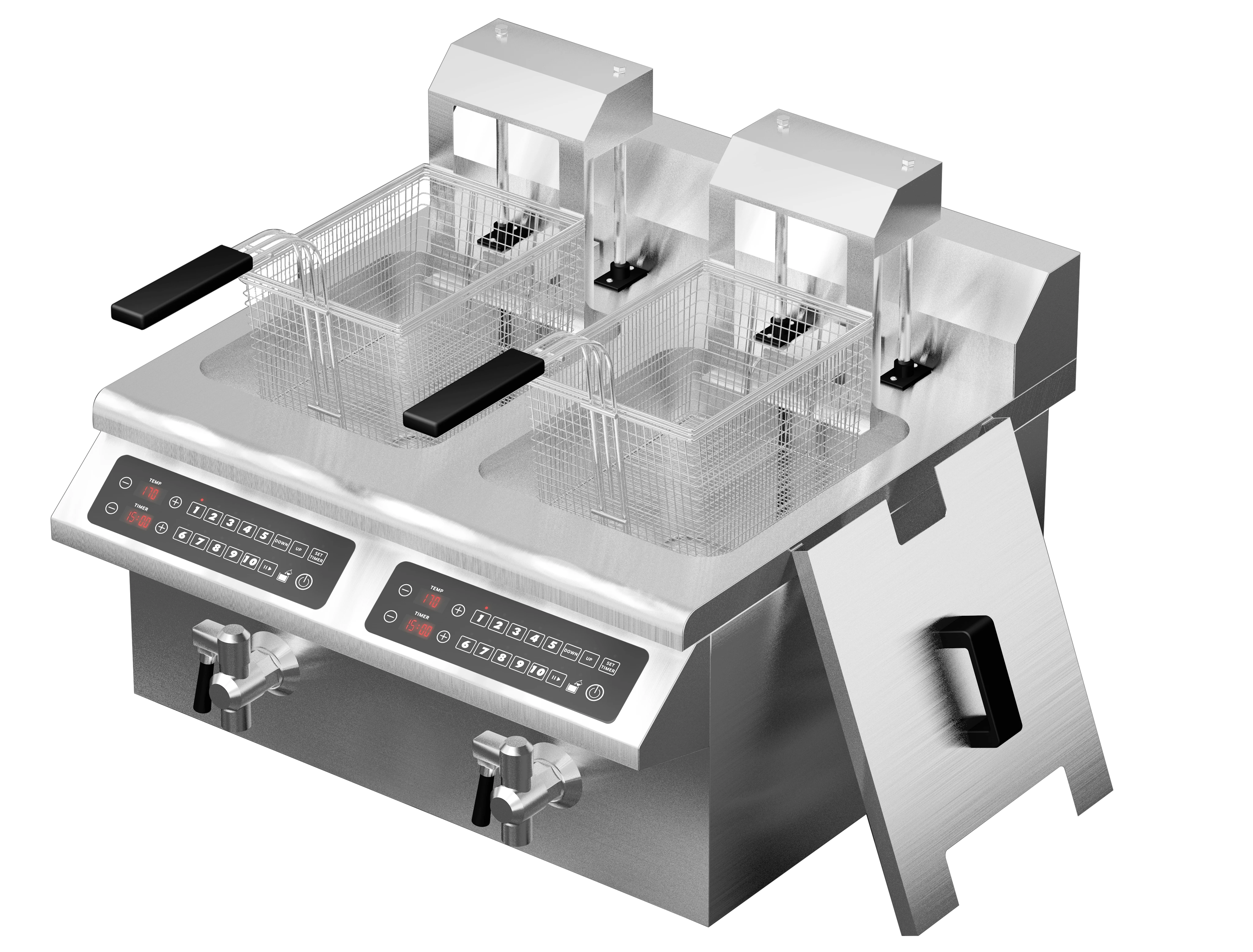
Beyond the vat design, controls and basket handling influence daily workflows. Our E350Z8H2 is specified with a stainless steel body, auto-lift, touch control, two-plug cord, and electronic overheating protection. These specifications do not, by themselves, confirm a cold zone.
The auto-lift feature relates to basket movement, while touch control provides an interface for operation. Electronic overheating protection is a listed safeguard, but staff must still follow the operating manual and monitor oil condition during service. Routine operator training remains important when using these functions.
At Better Induction, we provide ODM and OEM support for induction cooking equipment. For fryer projects, we recommend discussing crumb collection, vat access, and the intended menu during product development rather than treating these details as afterthoughts.
Regular Cleaning Remains Essential
Settled crumbs must eventually be removed. Operators should follow the manufacturer's cooling, draining, and cleaning instructions before accessing the lower vat. Oil in a cold zone may still be dangerously hot and should never be treated as safe to touch.
Breaded food service may demand more frequent checks than menus with little loose coating. Recording cleaning intervals and visible sediment levels helps supervisors identify when a routine needs adjustment. These records can also support more consistent maintenance practices across different shifts.
Filtration removes particles when performed correctly, but it cannot reverse chemical deterioration already present in oil. Staff should follow defined criteria for oil replacement and maintain the vat according to the equipment instructions.
The Role of Cold Zones in Fryer Maintenance
A cold zone gives heavier crumbs a relatively cooler place to settle, reducing scorching before scheduled removal. It helps with sediment management but does not replace skimming, filtration, cleaning, or responsible oil replacement. Understanding these limits helps operators establish realistic maintenance expectations.
At Better Induction, we encourage buyers to verify the vat design before specifying a commercial induction fryer. A commercial kitchen equipment supplier should explain how crumbs are collected and removed, so kitchen teams can plan maintenance around actual cooking needs.
GET IN TOUCH
Contact With us