
Oval pans are useful for cooking whole fish, long cuts of meat, and ingredients that need extra space. However, their elongated bases create a practical challenge when placed on round induction zones. The main concern is whether the heating area can transfer sufficient energy across the pan without creating large temperature differences.
For buyers selecting a restaurant induction cooker, pan compatibility involves more than checking whether cookware is magnetic. Base dimensions, contact stability, heating distribution, and cooking requirements all affect performance. Understanding these factors helps kitchen equipment buyers evaluate oval cookware before making purchasing decisions.
Why Does Pan Shape Affect Induction Heating?
Induction cooking uses an alternating magnetic field to generate heat within compatible cookware. The induction coil is usually circular, while an oval pan extends farther along one axis. This difference means the magnetic field may interact more strongly with certain sections of the base.
The central portion of an oval pan may receive more direct heating than its narrow ends. Heat then spreads through the cookware material. The resulting temperature distribution depends on the pan's construction, thickness, magnetic properties, and the operating conditions.
Pan shape alone does not determine compatibility. Two oval pans with similar dimensions may behave differently because their bases use different materials or layered structures. Buyers should examine the actual cooking base rather than judging performance from the upper rim.
Which Base Measurements Matter?
The first measurement is the length of the flat cooking base. Buyers should also record its width at the center and near both ends. These measurements help determine how much of the base overlaps the induction zone.
The advertised pan size may describe its outer rim rather than its bottom. Curved walls can create a substantial difference between these dimensions. Equipment buyers should request base measurements from cookware suppliers before comparing them with the cooker's recommended pan sizes.
Placement also matters. The pan should sit centrally over the cooking zone, with its longer axis extending evenly in both directions. However, a centered position does not mean that the entire base receives equal heating. Manufacturer guidance on compatible cookware dimensions remains important.
How Can Heating Uniformity Be Tested?
Heating performance should be evaluated under realistic cooking conditions. Begin with a compatible oval pan containing a measured quantity of water or another suitable test medium. Record the starting temperature and apply a consistent power setting.
Measure temperature changes at the center and toward both ends. Readings should be taken at comparable intervals. For liquid tests, natural convection can affect the results, so temperature differences should be interpreted alongside the test method.
For cooking applications involving direct pan contact, controlled food trials can provide additional information. Observe whether ingredients near the ends cook more slowly than those in the center. Repeated tests help distinguish persistent heating differences from temporary temperature variations.
Buyers evaluating a 3500 W induction cooker should remember that rated power does not describe heat distribution across an oval base. Power capacity and cookware compatibility are separate considerations. The pan must also fall within the appliance manufacturer's specified operating requirements.
What Role Does Base Construction Play?
Magnetic compatibility is essential for induction cooking. Cookware generally needs a suitable ferromagnetic layer in its base. However, the presence of magnetic material does not establish how evenly heat will spread across an elongated cooking surface.
Base thickness and construction influence heat distribution. Multilayer cookware may incorporate materials that spread heat laterally, but performance depends on the actual design. Buyers should review the cookware specifications rather than assume that every multilayer base behaves similarly.
Flatness deserves attention as well. Although induction heating does not require direct surface contact for heat transfer, a warped base can make the pan unstable. Rocking or uneven support can affect handling and may interfere with temperature sensing on certain appliances.
How Should Equipment Buyers Assess Compatibility?
Commercial kitchens need cookware and appliances that work together during repeated cooking cycles. Testing should reflect the intended menu, portion sizes, operating temperatures, and frequency of use. Short demonstrations may not reveal problems that develop during longer cooking periods.
At Better Induction, we develop induction cooking equipment through ODM and OEM services. Our product range includes commercial cooking appliances designed for different kitchen applications. We encourage buyers to review cookware dimensions and operating requirements during equipment selection rather than relying on nominal power ratings.
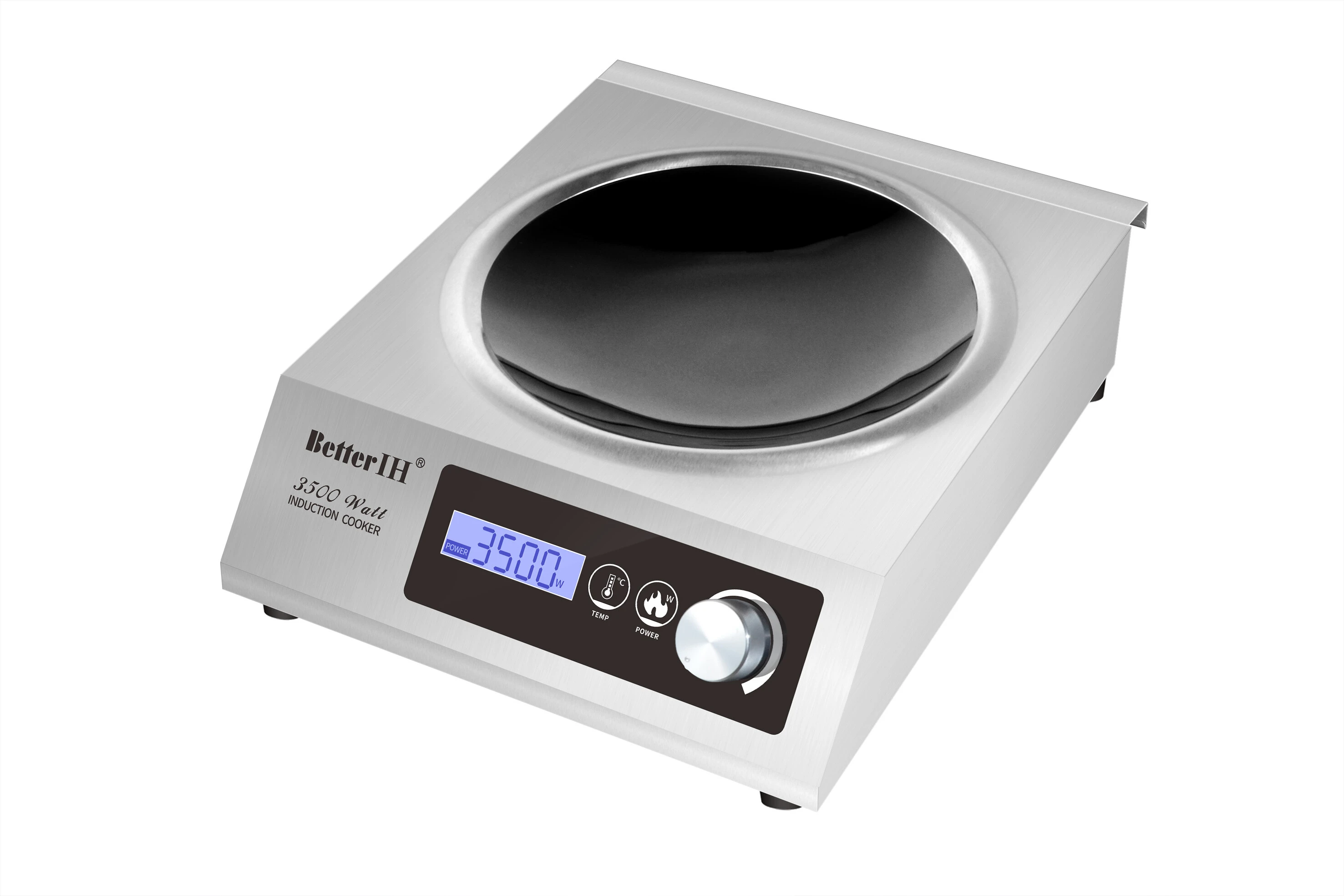
For example, our HB350A-1 features a stainless steel body, wok induction design, touch control, and an LCD display. Users can adjust power or temperature through a knob. The unit also incorporates half-bridge technology and electronic overheating protection.
However, its listed features do not establish compatibility with oval pans. Buyers should confirm the applicable cookware requirements and evaluate the intended pan configuration before selecting this model for such use. Wok-oriented equipment requires particular attention to the shape and support of the cooking vessel.
What Should Be Checked Before Purchasing?
Procurement teams should request the cookware's base dimensions, magnetic construction details, and relevant appliance compatibility guidance. They should also identify whether the pan will be used for boiling, simmering, frying, or other cooking tasks.
For a restaurant induction cooker, practical trials should examine heating consistency, pan stability, and temperature response during normal operation. These checks are especially useful when several cookware sizes will share the same cooking station.
When comparing a 3500W induction cooker with other equipment, buyers should examine more than wattage. Coil configuration, cookware detection requirements, power adjustment, and the manufacturer's recommended pan dimensions can influence the suitability of a particular combination.
Making a Practical Equipment Decision
Oval cookware can work on round induction zones when its magnetic base, dimensions, and construction suit the appliance. However, compatibility should be established through manufacturer guidance and representative cooking tests. Central heating performance alone cannot confirm satisfactory results across the entire pan.
At Better Induction, we support kitchen equipment brands through product design, development, and manufacturing services. We recommend sharing cookware dimensions, cooking applications, and operating expectations during project discussions. These details help us assess equipment requirements and discuss suitable ODM configurations before production.
GET IN TOUCH
Contact With us