
Fryer tank capacity and the amount of oil used during cooking are not the same measurement. Nominal capacity usually describes the tank's stated holding volume under a defined measurement method. Working oil volume refers to the quantity required during normal frying, within the appliance's specified operating limits.
Confusing these figures can affect oil purchasing, daily filling routines, and comparisons between fryer models. Tank size alone does not tell operators how much oil to pour into a fryer. Understanding both measurements helps purchasing teams compare equipment specifications and prepare practical operating instructions for kitchen staff.
Understanding the Two Capacity Measurements
Nominal tank capacity is a reference figure for the fryer vessel. Depending on the manufacturer, it may describe a geometric volume or a stated fill reference. Buyers should not assume that every capacity label uses the same measurement method.
Working oil volume is different. It describes the oil quantity permitted or recommended for cooking, often indicated by minimum and maximum level marks. These limits allow room for food displacement, bubbling, and normal oil movement during frying.
Operators should follow the specified filling instructions rather than calculate oil volume from tank dimensions. Two fryers with similar nominal capacities may have different working ranges because of their tank geometry, basket arrangement, and internal components.
Why Oil Level Matters During Frying
Food entering hot oil takes up space and causes the oil surface to rise. Moisture released from the food also produces bubbling. Filling the vessel to its nominal holding volume could leave insufficient clearance for these changes, increasing the risk of oil overflowing.
Insufficient oil creates a different problem. Food may not remain properly immersed, while heating components could operate outside their intended conditions. Kitchen staff should maintain oil within the manufacturer's specified operating range.
Oil temperature also affects volume because heated oil expands. Operators should check oil levels according to the appliance instructions and account for the specified measurement conditions. Consistent filling procedures help kitchen teams manage oil use across different shifts.
Comparing Oil Requirements Across Fryer Models
When selecting an induction deep fryer, buyers should request nominal tank capacity and working oil volume as separate specifications. This distinction prevents purchasing teams from assuming that the advertised vessel capacity represents the oil required for cooking.
Frying requirements also deserve attention. Basket dimensions, recommended batch size, cooking temperature, and repeated loading conditions influence daily operation. Working oil volume helps estimate oil purchases, but it does not independently determine cooking output or temperature recovery.
Oil replacement planning requires a clear calculation. Buyers can multiply the verified working fill quantity by the expected number of complete oil changes. Replenishment should be estimated separately because actual consumption depends on food moisture, operating hours, filtration practices, and the kitchen's oil management procedures.
Tank Design and Its Effect on Working Oil Volume
Tank geometry influences how oil surrounds the basket and how its level changes when food enters. Basket depth, internal clearances, and component placement affect usable cooking space. These details explain why nominal capacity alone provides limited information about actual frying conditions.
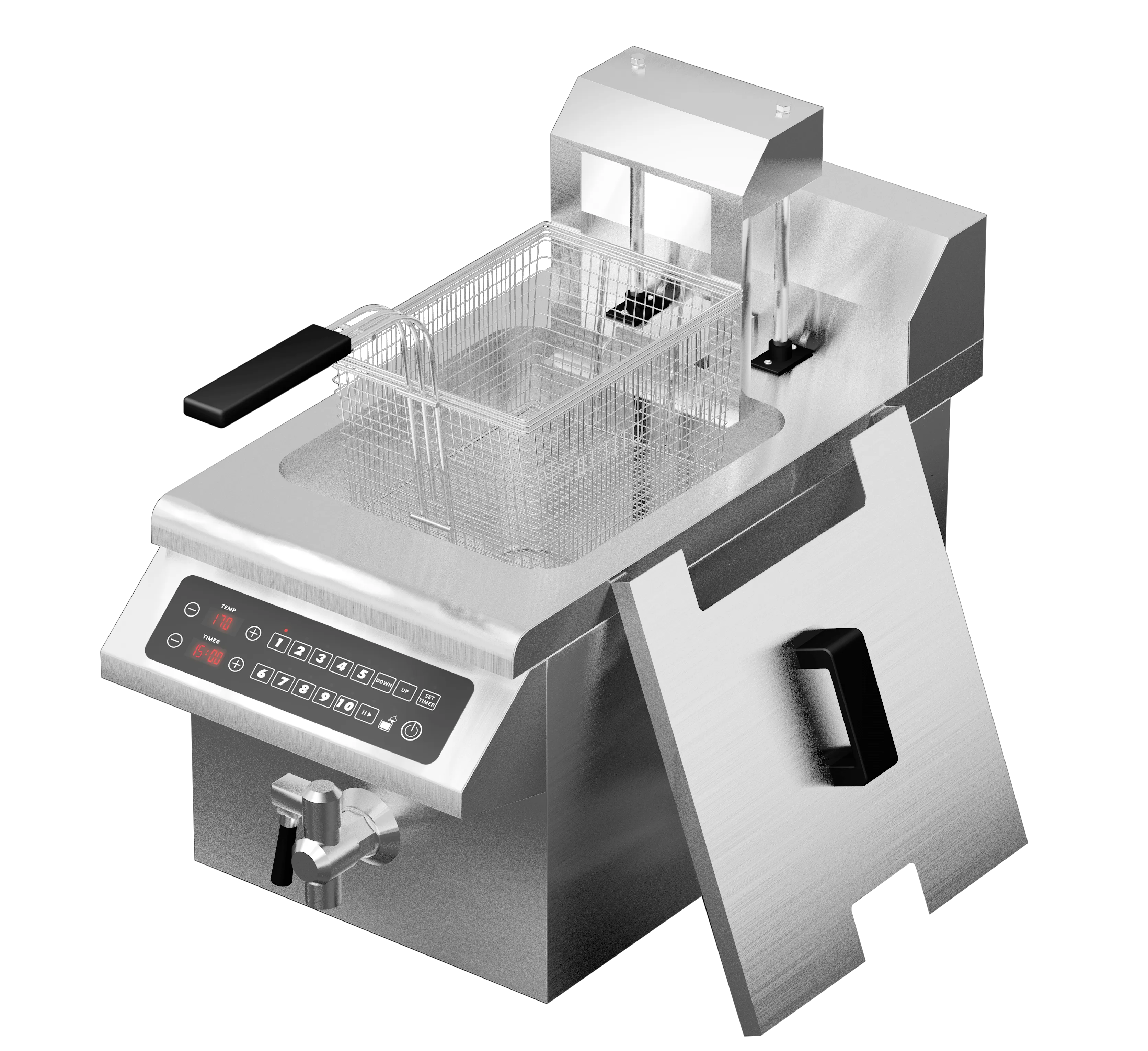
Equipment controls and handling features should also be examined during procurement. Our E350Z8I features a stainless steel body, auto-lift function, touch control, and electronic overheating protection. These specifications describe its construction and operation, but they do not establish its tank capacity or working oil volume.
At Better Induction, we consider these distinctions during ODM product discussions. Our services cover product design, research, development, and manufacturing for customer-branded cooking equipment. Clear operating specifications help us communicate product requirements with customers before production.
What Should Buyers Check Before Ordering?
When working with a commercial cooking equipment supplier, buyers should request documentation identifying nominal capacity, working oil range, and applicable level markings. The specification should also explain the measurement conditions so purchasing teams can compare different models consistently.
Additional checks should cover basket dimensions, recommended loading quantities, electrical requirements, control functions, and cleaning procedures. These details provide a clearer picture of daily operation than tank capacity alone. Buyers should also confirm whether the stated oil volume applies to the supplied basket and tank configuration.
For private-label projects, product manuals and specification sheets should match the approved equipment design. Changes to tank geometry or internal components may affect operating oil levels. Reviewing these documents before production helps maintain consistency between product information and actual equipment requirements.
Making Sense of Both Capacity Figures
Nominal tank capacity describes a vessel reference, while working oil volume identifies the quantity used within specified operating limits. Both figures are useful, but they serve different purposes. Understanding this distinction supports equipment comparisons, oil purchasing plans, and consistent kitchen filling procedures.
At Better Induction, we incorporate these considerations into our ODM development discussions. Whether evaluating an induction deep fryer or consulting a commercial cooking equipment supplier, buyers should obtain written confirmation of the operating oil range and measurement conditions before approving the final product specification.
GET IN TOUCH
Contact With us