
Modern commercial kitchens often use different heating equipment for food preparation and food service. Although induction cooking and buffet warming both rely on heating technology, their purposes are different. One focuses on preparing meals, while the other supports food holding and presentation.
For restaurant operators, hotel kitchens, and catering businesses, choosing suitable equipment requires an understanding of working methods, application scenarios, and operation needs. By comparing these two systems, buyers can plan kitchen layouts more effectively and select equipment that fits their daily workflow.
Different Purposes of Buffet Warming and Induction Cooking
Induction cooking is mainly used for preparing food from raw ingredients. It uses electromagnetic technology to transfer heat through compatible cookware, allowing chefs to adjust temperatures according to different cooking processes.
A commercial induction cooker is commonly applied in professional kitchens where temperature control and cooking flexibility are important. Restaurants may use this type of equipment for boiling, frying, simmering, and other preparation tasks based on their menu requirements.
Buffet warming serves a different function because it focuses on maintaining the temperature of prepared dishes. It is usually placed in buffet areas, catering spaces, or hotel dining environments where food needs to remain available for service.
An induction buffet warmer is designed to support food holding after cooking. Instead of creating high heat for preparation, it helps maintain suitable temperatures while considering serving convenience and equipment placement.
Temperature Control and Application Differences
The biggest difference between these two systems is how heat is used during the food service process. Induction cooking requires adjustable heating performance because different recipes may need different temperature levels and cooking times.
Warming equipment has another priority. It needs to maintain prepared food conditions for a certain period while supporting smooth customer service. Stable temperature management and simple operation are important factors for these applications.
In a complete commercial kitchen, these two types of equipment can work together. Cooking areas can use induction equipment for meal preparation, while buffet or serving areas can use warming equipment to support food presentation.
When selecting equipment, buyers often review factors such as kitchen size, workflow arrangement, cleaning requirements, and daily usage frequency. These details help businesses choose products that match their actual operating environment.
Practical Factors for Choosing Commercial Kitchen Equipment
Equipment selection involves more than understanding basic heating functions. Buyers also need to consider product structure, control methods, safety design, and supplier support before starting a project.
We provide ODM and OEM services for partners that need customized induction kitchen products. Our services include product design, research and development, manufacturing, and project support to meet different market requirements.
With experience in induction kitchen equipment, Better Induction works with household and professional kitchen brands on customized solutions. We develop products covering different applications, including induction cookers, induction woks, induction fryers, and other commercial kitchen equipment.
Our company focuses on product development and manufacturing processes for global customers. We support different market requirements through quality management systems and certifications such as CE, FCC, KC, ETL, CB, and RoHS according to regional needs.
BF100A Features for Food Warming Applications
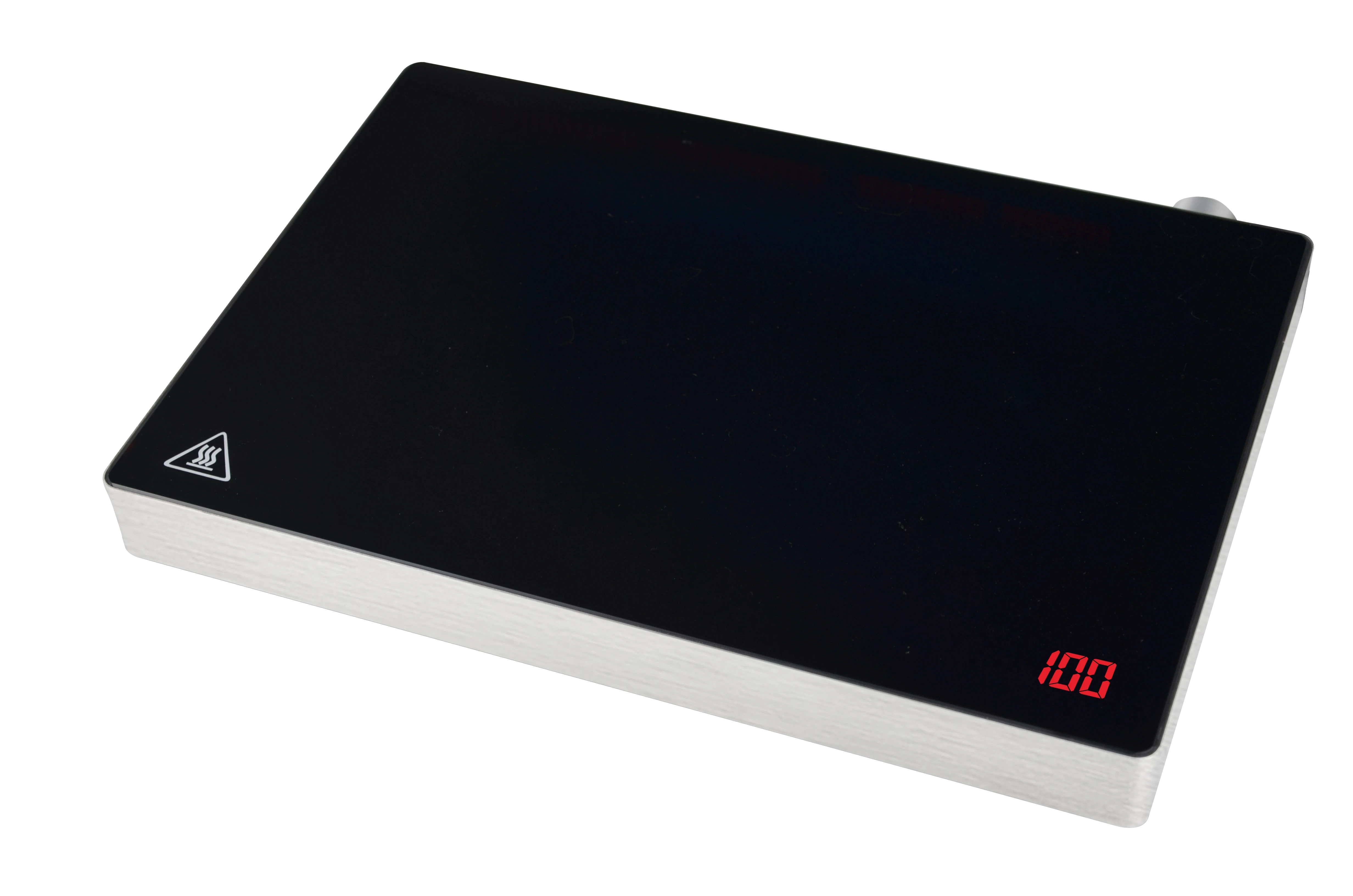
For buffet warming requirements, the BF100A is designed for keeping food warm in commercial environments. It features a stainless steel body and provides different hob options, including glass hob, Schott Ceran hob, and EuroKera France hob.
The BF100A uses a knob control method for temperature adjustment. The temperature display is located on the right corner of the glass plate, allowing users to view settings during operation.
The product is especially designed for warming use rather than food preparation. It also includes electronic overheating protection to support daily operation. These features make it suitable for buffet areas, catering services, and other food serving applications.
For businesses comparing different equipment types, understanding product functions is important. Cooking equipment and warming equipment may share similar heating technology, but their design goals are different.
A hotel buffet may require equipment that supports long serving periods, while a restaurant kitchen may need flexible cooking functions. Reviewing these differences before purchasing helps buyers create more practical equipment plans.
Suitable Equipment Choices for Different Kitchen Requirements
Commercial kitchens usually include multiple working areas, and each area has different equipment needs. Cooking stations focus on preparation tasks, while service areas focus on maintaining food conditions and improving customer experience.
We help partners evaluate equipment requirements according to application scenarios. A commercial induction cooker supports cooking processes that require temperature adjustment, while an induction buffet warmer supports prepared food service and temperature maintenance.
As an induction kitchen equipment manufacturer, Better Induction continues to provide ODM and OEM support for different markets. We combine product development experience with manufacturing capabilities to help partners create suitable solutions.
Understanding the difference between cooking and warming systems allows buyers to make clearer decisions. By matching equipment functions with kitchen workflows, businesses can build more organized operations and select products that fit their service requirements.
GET IN TOUCH
Contact With us