
Two pans with identical rim diameters may behave differently on the same induction hob. One begins heating immediately, while the other is not recognized. Often, the difference lies beneath the pan rather than in its overall size.
Minimum pan detection size refers to the smallest suitable magnetic base that a cooking zone can recognize under specified conditions. Buyers assessing a commercial induction cooker need to distinguish this measurement from cookware dimensions printed on packaging. This matters for saucepans and warming vessels.
Which Part of the Pan Is Measured?
Induction coils produce changing magnetic fields beneath the cooking surface. Suitable cookware interacts with these fields, allowing heat to develop in the base. The appliance controls check whether suitable cookware is present before heating begins.
The stated minimum usually concerns the effective magnetic area of the pan base, not the width across its rim. Test cookware and detection criteria vary by manufacturer. Buyers should ask whether the published figure refers to the magnetic disc, the flat base, or a specified reference pan.
Some pans have a magnetic disc bonded to a wider base. Others use magnetic material across nearly the entire bottom. Equal outside diameters do not mean equal detection performance, especially when cookware combines several metals.
Why Rim Measurements Can Be Misleading
Saucepans often narrow toward the bottom. For example, a pan sold with an 18 cm rim diameter might have a 14 cm flat base. Its magnetic insert could be narrower again. These figures are illustrative rather than product specifications.
Cookware catalogues may also describe a lid size or the maximum outer dimension. Neither figure establishes the area that interacts with an induction coil. Buyers should seek a technical drawing or physically measure the flat bottom whenever precise dimensions matter.
Measurements should focus on the usable magnetic section, excluding decorative edges and nonmagnetic rings. Suppliers can clarify layered base construction. This prevents procurement teams from treating a rim label as a detection specification.
Does the Material Affect Recognition?
Yes. Suitable magnetic steels and cast iron can respond to an induction field. Aluminium, copper, and certain stainless steel grades are not sufficiently magnetic by themselves, although cookware made with these materials may include an induction-compatible magnetic layer.
Magnetic coverage also matters. Small central inserts can behave differently from broad magnetic bases, even when both pans carry an induction-compatible symbol. Material thickness, construction, and geometry can also influence recognition.
We suggest testing several points underneath a pan with a magnet. This reveals magnetic coverage but cannot confirm heating performance. Operating tests remain necessary before deciding whether the cookware is suitable.
What Changes When the Pan Is Near the Limit?
Cookware close to the detection threshold may be sensitive to placement. Moving a small pan away from the centre changes its position relative to the coil. Recognition or heating may stop when the detected magnetic area becomes insufficient.
Base shape introduces another variable. Warped bottoms can make cookware unstable and affect heating distribution. Induction does not require metal-to-glass contact, yet stable cookware remains preferable for routine kitchen operation.
Power specifications should be considered separately. A 3500 W induction cooktop is identified by its rated output, not by the smallest pan it can detect. Higher power alone does not establish compatibility with smaller cookware. Buyers should request rated output and minimum detection dimensions as separate specifications.
How Can Buyers Check the Claim?
Start with the smallest vessel used in daily service. Record its rim diameter, flat-bottom diameter, magnetic area, and base condition. Include small saucepans, narrow containers, and warming vessels rather than testing only standard stockpots.
Next, position the vessel centrally on the intended cooking zone. Follow the operating instructions and check whether the appliance recognizes it and heats it consistently. Avoid prolonged heating tests with empty pans. Repeat the process with different cookware types if several are used in one kitchen.
For bulk purchases, record the pan model, measurements, heating setting, and test outcome. These records help compare a commercial induction cooker with existing cookware. They also make discussions between procurement teams and equipment suppliers more precise.
How Does Equipment Purpose Fit Into Selection?
Detection is important, but it is not the only requirement for smaller vessels. Kitchens should also consider the intended heating task, control method, physical stability, and protection functions. Keeping food warm differs from rapid boiling.
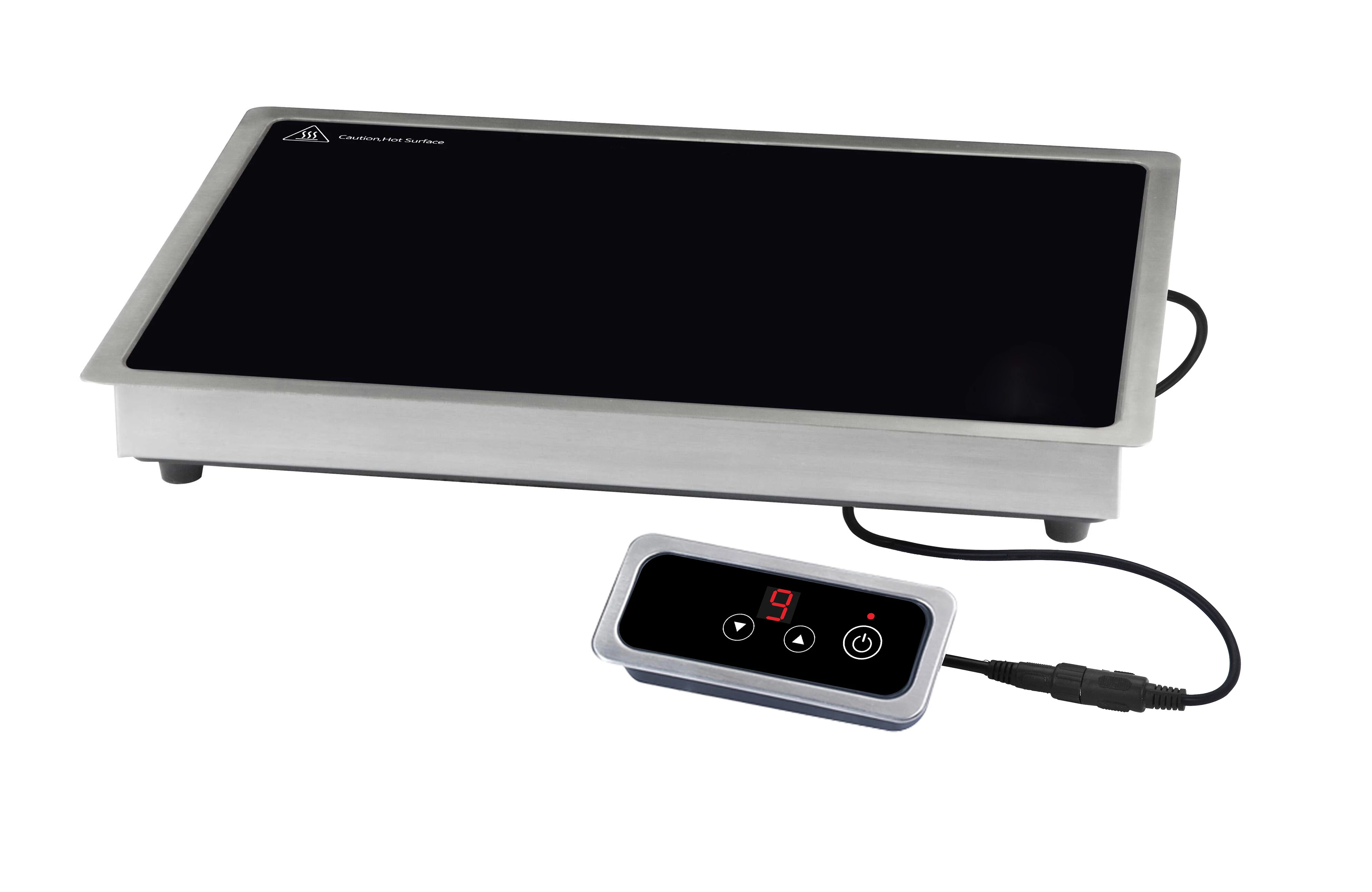
Our BF100A-B is especially intended for keeping food warm. It features a stainless steel body, touch control, electronic overheating protection, and glass hob options including Schott Ceran and Eurokera France. These features do not establish a minimum pan detection diameter, which should be confirmed separately for the selected configuration.
Through Better Induction, we provide induction cooking equipment design, development, and manufacturing support for OEM and ODM customers. When discussing proposed appliances, we can review intended vessel types and identify cookware dimensions requiring verification.
What Should the Specification Actually Tell You?
Minimum pan detection size concerns the effective magnetic base recognized by a particular cooking zone under defined conditions. It differs from rim diameter, zone diameter, and rated power. Practical comparisons should consider the manufacturer's published criteria and the cookware used during normal operation.
Before selecting a 3500W induction cooktop for smaller vessels, buyers should request the detection specification and test representative pans. Better Induction can discuss application requirements during product development, while measured base dimensions and documented tests provide the basis for equipment selection.
GET IN TOUCH
Contact With us