
Two induction samples may appear to perform differently simply because they were tested in a fixed sequence. Cookware retains heat, operators become familiar with controls, and starting temperatures can change between runs. These factors may affect boiling time or temperature response without reflecting a difference between the units.
When we evaluate a commercial induction cooker, we treat test order as a controlled variable rather than an administrative detail. We want each sample to face comparable conditions. Reversing the sequence and recording starting conditions help us identify differences caused by the equipment instead of the test procedure.
Why Does the Second Sample Sometimes Seem Faster?
Heat remains in cookware after a heating cycle ends. If we move the same pan straight to another sample, its warmer base may reduce the time required to reach the next target temperature. This matters especially in short water-boiling tests, where a small starting difference can affect the result.
The cooking surface may also remain warm after the pan is removed. Heat travels back from cookware to the surface during operation. We therefore check the starting condition of both the pan and equipment rather than assuming that switching off immediately creates a fresh test.
Water temperature can drift while containers wait for their turn. If the second portion starts warmer, comparing boiling times becomes misleading. We measure the water immediately before each run, use the same quantity, and define the endpoint clearly.
Operator Familiarity Can Change the Timing
The first run often serves as an informal practice session. An operator learns how a knob responds, when to start the timer, and how the display or indicator behaves. Later runs may proceed more smoothly even if the equipment has not changed.
We reduce this effect by agreeing on a written procedure before testing. The procedure specifies when to place the pan, when to adjust power, and when to record a result. One trained operator can perform the sequence, while another person records observations.
Control settings require careful interpretation. Matching knob positions does not necessarily produce matching electrical input or heating output across different designs. When appropriate, we measure actual power and compare results under defined operating conditions rather than treating identical control positions as equivalent performance.
How Should the Trial Order Be Arranged?
Testing sample X five times before sample Y makes time-related changes difficult to separate from equipment behavior. We prefer alternating the sequence. For example, X–Y–Y–X can be followed by Y–X–X–Y under the same preparation rules.
Each run still needs a defined reset. The cookware must return to the specified starting temperature, and fresh water or ingredients should be prepared consistently. Without this step, reversing the order alone cannot prevent residual heat from influencing the outcome.
Repeated measurements reveal whether a difference is stable. We review individual runs before comparing averages, because a single unusually fast result can distort the overall impression. If one position in the sequence repeatedly performs better, we investigate the setup before attributing that result to the unit.
What Else Must Remain Consistent?
Pan material, base diameter, flatness, and weight can influence induction heating. We use the same suitable pan after cooling or select closely matched cookware. Either approach requires a documented method so differences in the pan do not become differences assigned to the equipment.
Power supply conditions also deserve attention. Voltage fluctuations and other connected loads can affect the conditions of a trial. We document the outlets and supply arrangement, then check electrical measurements when the evaluation calls for them.
For sauté trials, water-boiling time is not enough. We keep oil quantity, food mass, stirring pattern, and sensor position consistent. We also record temperature changes after a power adjustment. These details help distinguish heating speed from control response, overshoot, and recovery behavior.
Where Product Controls Enter the Comparison
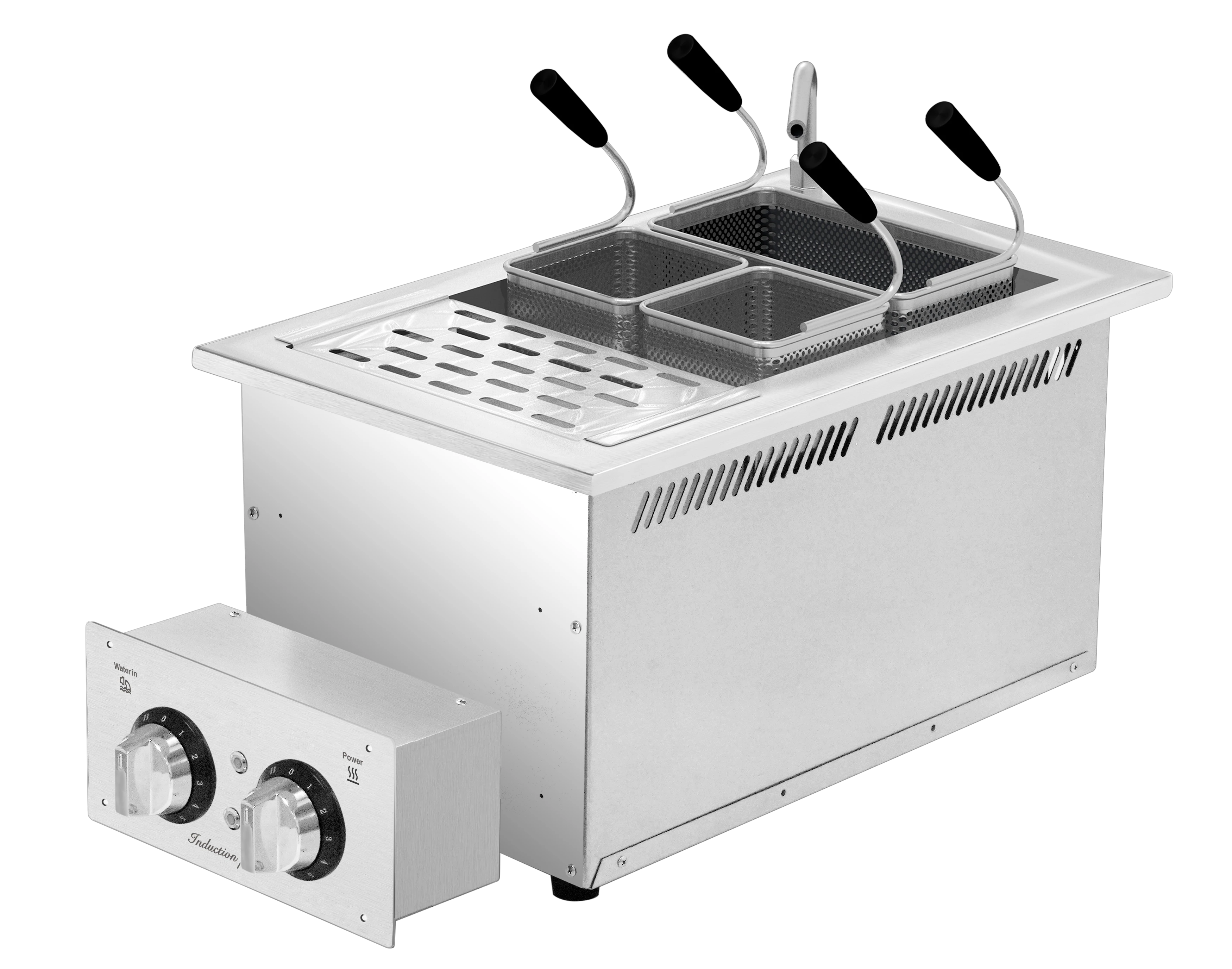
Equipment interfaces influence how reliably operators repeat a test. The BI500PS has a stainless steel body and knob control. We account for the knob operation in our procedure by documenting each adjustment and using the same timing rules across runs.
For buyers discussing induction product design, test records should connect control behavior with the intended kitchen task. We recommend noting setting changes, measured temperatures, and operator actions together. This provides a clearer basis for reviewing a design than one boiling-time figure.
When reviewing a commercial induction cooker, we also separate test findings from assumptions about daily operation. Consistent laboratory conditions help comparison, but representative cooking tasks are needed to judge how the equipment behaves in the intended kitchen.
At Better Induction, our OEM and ODM work includes design, development, and manufacturing support. We use application requirements to guide sample discussions, including cookware choice, intended cooking processes, and practical test conditions. Such information helps keep evaluation focused on what the buyer needs to verify.
What the Results Should Tell Us
A fair comparison should show whether performance differences remain when the sample order changes. We look for consistent patterns across repeated runs, not just the quickest result. Starting temperatures, equipment resets, and the recorded sequence make those patterns easier to interpret.
At Better Induction, we welcome test records that identify the sequence, cookware, control settings, and measured outcomes. These details support specific discussions about induction product design and possible adjustments. The goal is a comparison that buyers can explain, repeat, and use for their next development decision.
GET IN TOUCH
Contact With us