
A frying pan advertised as 28 cm wide may have a flat base measuring only 22 cm. This difference is not necessarily a manufacturing error. Cookware manufacturers often measure the upper rim, while the bottom is narrower because of the pan's shape. Understanding these measurements is important when selecting cookware for commercial kitchens.
For a restaurant induction cooker, the advertised diameter does not always indicate how well a pan will work. The actual base diameter and magnetic material are more relevant to induction compatibility. Buyers should understand these differences before purchasing cookware or kitchen equipment.
What Does the Advertised Diameter Actually Mean?
Cookware manufacturers commonly measure frying pans across the upper opening. This dimension describes the distance from one side of the rim to the other. It helps buyers estimate the available cooking space and choose suitable lids.
However, the upper opening does not represent the flat area underneath the pan. Frying pans often have sloping walls, which make the rim wider than the bottom. Two pans advertised with identical diameters may therefore have different base measurements.
Product descriptions should distinguish between the rim diameter and the flat-base diameter. Buyers should check technical drawings or request both measurements from suppliers. This information is particularly useful when comparing cookware from different manufacturers.
Why Does the Base Become Smaller?
Pan geometry is the main reason for the difference. Frying pans typically have outward-sloping sides to provide more space for moving ingredients. Their bottoms remain narrower to support stable placement on the cooking surface.
The angle of the sidewalls affects the difference between the two measurements. Pans with sharply sloping walls may have smaller bases than pans with nearly vertical sides. Straight-sided stockpots often show less variation between their upper and lower diameters.
Rounded corners also affect measurement. The transition between the bottom and sidewalls is not part of the completely flat base. Consequently, the actual contact area may be narrower than the visible underside.
Does the Base Diameter Affect Induction Performance?
Induction cooking uses an alternating magnetic field to generate heat within compatible cookware. The magnetic properties and dimensions of the pan base influence how effectively energy transfers from the hob to the vessel.
When evaluating a 3500 W induction cooker, buyers should not assume that its power rating determines the compatible pan diameter. Each model may have specific cookware detection requirements. Manufacturers' operating instructions should provide guidance on suitable pan sizes.
Pan construction also matters. Stainless steel cookware may contain different metal layers, and not every stainless steel gqingrade is suitable for induction heating. Some pans use a separate magnetic disc beneath the base. Its diameter may differ from both the advertised rim size and the external bottom diameter.
How Can Buyers Measure the Correct Diameter?
Start with the cookware placed upside down on a flat surface. Measure the straight, flat portion of the underside, excluding curved edges. Record this measurement separately from the diameter shown on the packaging.
For cookware with a bonded magnetic disc, measure the disc diameter as well. A small magnet can help identify magnetic material, but this simple test cannot confirm heating performance. Compatibility still depends on the specific induction hob.
Commercial buyers should compare these measurements with the equipment manufacturer's recommendations. Testing representative cookware before bulk purchasing is also useful. Different pan materials, base thicknesses, and diameters should be included in the evaluation.
What Else Should Commercial Kitchens Check?
Kitchen equipment selection involves more than cookware diameter. Buyers should consider cooking tasks, pan weight, available counter space, and electrical supply conditions. These factors influence equipment suitability during daily service.
Pan positioning deserves attention during operation. Cookware should sit centrally on the designated cooking area, following the manufacturer's instructions. Uneven or warped bases may affect stability and heat distribution, even when the pan contains suitable magnetic material.
Cleaning and handling practices are also relevant. Staff should keep cookware bottoms free from food residue and avoid dragging heavy pans across glass surfaces. Regular inspection helps identify damaged cookware before it affects cooking operations.
How Does Equipment Design Support Cookware Selection?
For commercial kitchen equipment manufacturers, cookware compatibility is an important product development consideration. At Better Induction, we provide induction cooking equipment and ODM/OEM services. We encourage customers to share their intended cookware specifications during product discussions.
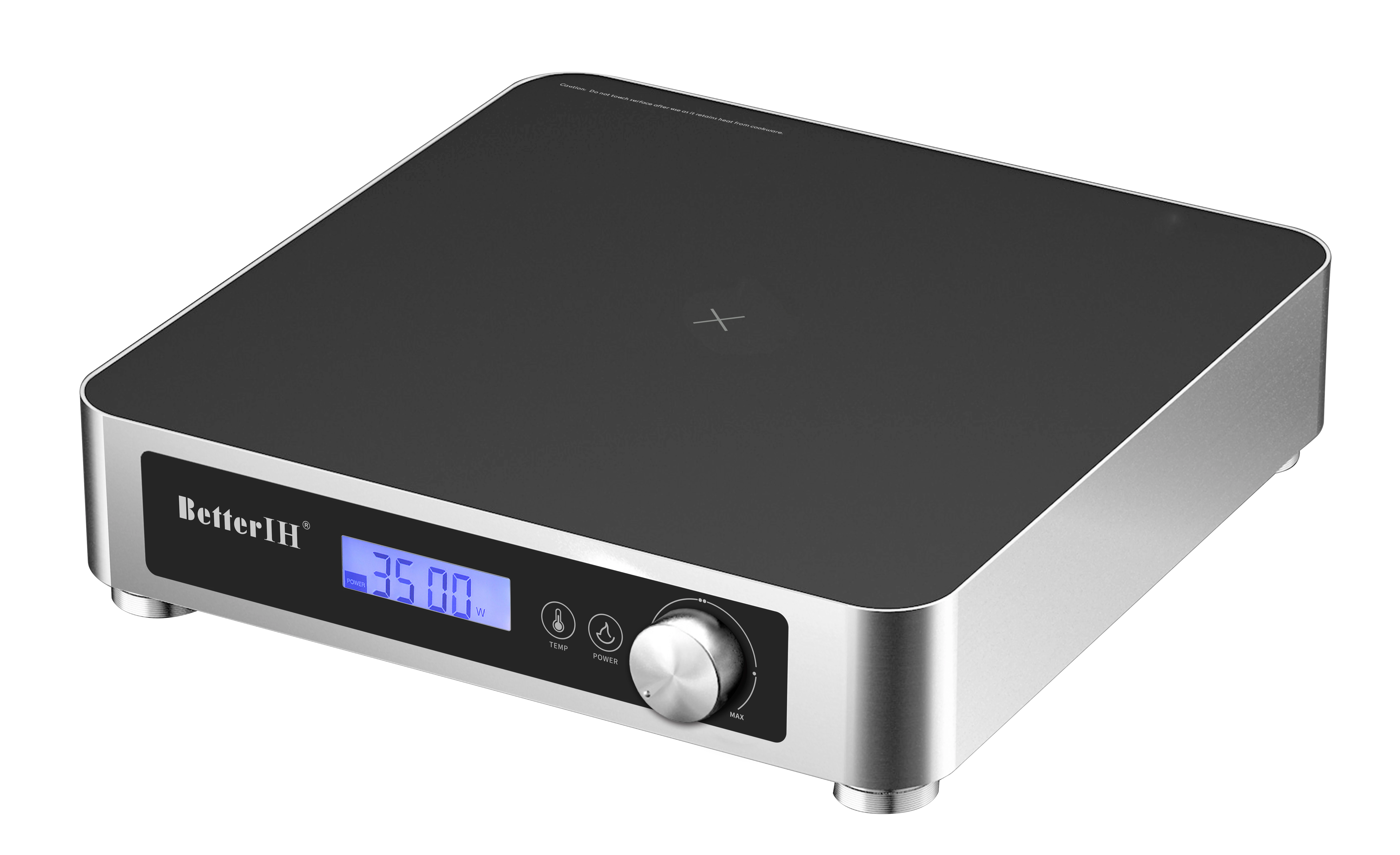
Our BE350A features a stainless steel body with glass hob, Schott Ceran hob, or Eurokera France hob options. The model includes touch control, an LCD display, knob adjustment of power or temperature, and electronic overheating protection.
These features address equipment construction and operation. However, they do not establish a specific compatible cookware diameter. When discussing a restaurant induction cooker, we recommend confirming the selected model's cookware requirements before placing an order.
What Buyers Should Remember
The advertised diameter of a pan usually describes its upper opening, while the flat base may be smaller. Sloping sidewalls, rounded corners, and magnetic base construction explain this difference. For a 3500W induction cooker, buyers should verify the actual magnetic base diameter rather than relying only on the printed cookware size.
At Better Induction, we encourage customers to include cookware dimensions in their equipment requirements. Accurate measurements and practical compatibility checks help purchasing teams select suitable cookware and plan commercial kitchen operations with greater confidence.
GET IN TOUCH
Contact With us