
A fryer trial can produce an evenly browned sample while leaving an important problem unseen. During frying, batter fragments may detach and collect in the oil. These particles affect how operators judge the cooking process when comparing fryers.
Recording batter shedding helps separate food preparation problems from fryer operating conditions. We recommend treating the amount, timing, and appearance of detached coating as trial observations rather than relying only on the finished food's color and texture.
What Detached Batter Reveals About Frying Conditions
Batter shedding occurs when wet coating or breading separates from food during loading, frying, movement, or removal. Some loss may reflect coating adhesion, while handling may cause further loss. Both matter during repeated batches.
Loose fragments can brown faster than the coated food because they are smaller and exposed directly to hot oil. They may brown before the main product is cooked. Recording this difference helps operators avoid confusing floating crumbs with product doneness.
The location of detached material also provides clues. Fragments released immediately after loading may indicate weak coating adhesion or rough basket handling. Material released during lifting may point toward product contact or movement. Trial notes should distinguish these stages before drawing conclusions.
For an auto-lift induction fryer, this record is useful when assessing whether the planned lifting sequence handles fragile coatings consistently. Automatic movement does not eliminate shedding, so loading practice still matters.
How Should Trial Teams Measure Batter Loss?
Start with a fixed recipe and coating procedure. Record batter mixing time, product temperature, coating pickup, and the interval between coating and frying. These variables affect adhesion even with unchanged fryer settings. Keep sample size and preparation steps consistent across runs.
Use the same batch weight, oil quantity, set temperature, cooking duration, and basket loading pattern for each comparison. Record the actual oil temperature before loading and its recovery during cooking when measurement equipment is available. These observations help explain differences between runs.
At each defined stage, note whether crumbs appear during loading, cooking, or basket removal. Teams can photograph the oil surface under consistent lighting and filter detached solids after the batch. Weighing recovered particles provides a comparable measure when the method is controlled. Allow the collected material to drain using the same procedure before each weighing, and document whether residue includes food crumbs as well as batter.
Keep the recorded quantity separate from judgments about appearance. One batch may release a few large pieces, while another produces many fine particles. A simple log should include particle mass, visible size distribution, product condition, and operator notes. Repeated runs reveal handling errors. Include a reference photograph for each run so reviewers can compare visible loss without relying entirely on written descriptions.
The Impact on Food Quality and Kitchen Operations
Excess fragments can complicate cleaning and oil management. Small particles may remain suspended or settle in areas that need attention during routine maintenance. Record where particles accumulate and whether cleaning interrupts operations.
Shedding also affects presentation and usable yield. When coating separates, the cooked item may lose coverage or develop uneven texture. Record the number of pieces with visible bare areas after frying, not simply their average color. Compare quality alongside cooking time.
Throughput comparisons need similar care. Faster basket cycles may look favorable until staff spend additional time filtering oil or correcting damaged products. We suggest logging handling time, cleaning actions, and rejected pieces per batch. This connects trials to kitchen work.
Results should be reviewed across different coated foods where the intended menu requires them. Thin tempura-style coatings and thicker breaded products may respond differently to handling and cooking conditions. Trials should not transfer a finding from one recipe to another without further testing.
Equipment Features and Their Role in Trial Evaluation
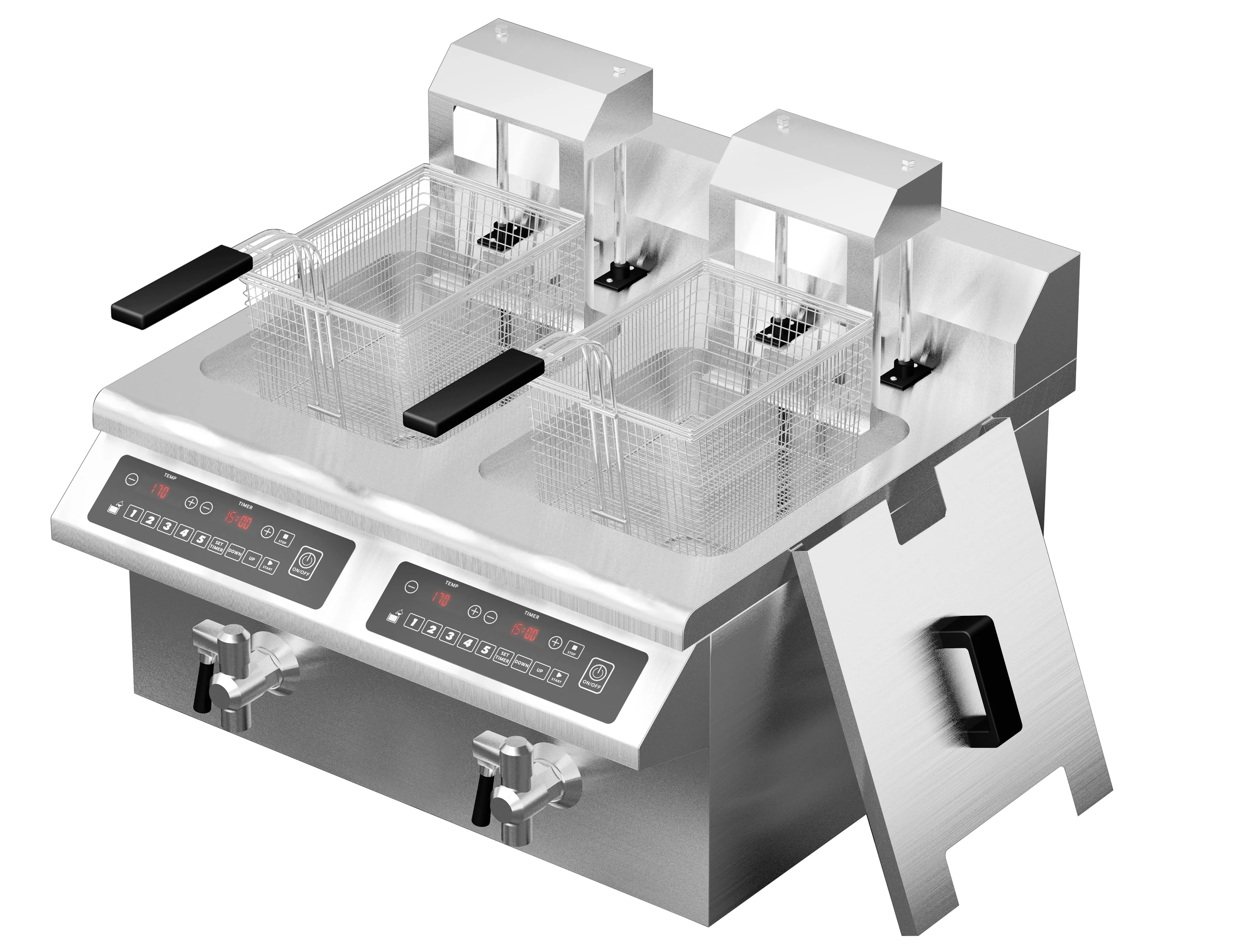
Equipment information belongs in the trial record, but only as context for observed results. Our E350Z8F2-L model has a stainless steel body, auto-lift function, touch control, two-plug cord, and electronic overheating protection. Record these features without assuming they reduce shedding.
The lift cycle offers one specific point for observation. Teams can note whether fragments separate when the basket rises and compare that result with fragments released during loading. Operators should follow the equipment instructions and record the actual handling sequence for every run.
As an induction ODM manufacturer, we use application feedback to discuss practical equipment requirements with commercial kitchen brands. Useful reports identify the coated food, batch size, cooking settings, shedding measurements, and cleaning implications. Specific observations are more useful than broad claims about frying performance.
At Better Induction, our work covers induction cooking equipment design and manufacturing for OEM and ODM customers. We approach application trials as a way to clarify operating needs before design decisions. These records support discussions about controls and maintenance.
What Should a Reliable Trial Report Include?
Batter shedding deserves a place in the final comparison because it links coating integrity, oil condition, cleaning work, and product consistency. The report should state how fragments were collected, when loss occurred, and whether results repeated under controlled conditions. These details make conclusions easier to review.
For buyers assessing an auto-lift induction fryer, shedding data should accompany cooking time and finished-product quality. Better Induction can review such application records with customers considering equipment configurations. As an induction ODM manufacturer, we encourage sharing the actual recipe and trial method so design discussions begin with measurable kitchen needs.
GET IN TOUCH
Contact With us