
Efficiency figures with decimal places can appear highly accurate. However, a precise number does not necessarily represent a reliable measurement. Instrument limitations, environmental conditions, and testing procedures can influence the final result. These factors become important when buyers compare equipment with similar performance ratings.
For commercial induction equipment, measurement uncertainty provides context for reported efficiency values. It indicates the possible variation associated with the measurement process. Without this information, buyers may interpret small numerical differences as performance improvements, even when the available test evidence cannot support that conclusion.
What Does Measurement Uncertainty Reveal?
Measurement uncertainty describes the range of values reasonably associated with a measured result. It reflects limitations in instruments, testing conditions, and calculation methods. Reporting uncertainty does not mean the measurement is unreliable. Instead, it explains how confidently the result can be interpreted.
Consider two induction cookers reporting efficiencies of 90.2% and 90.5%. The numerical difference is 0.3 percentage points. If both measurements have expanded uncertainties of ±0.6 percentage points, their intervals overlap. The reported figures alone cannot establish a meaningful performance difference.
Precision and accuracy should also be distinguished. Precision concerns the consistency of repeated readings, while accuracy concerns closeness to the true value. Repeated measurements may appear consistent even when calibration errors affect the results.
Where Can Testing Errors Enter the Calculation?
Electrical input measurements are one source of uncertainty. Power analyzers record energy consumption during operation. Their accuracy, calibration condition, and measurement settings influence the readings. Engineers should confirm that the instruments can measure the electrical characteristics of the equipment being tested.
Thermal output calculations introduce further uncertainty. Water-heating tests often estimate transferred energy from water mass and temperature change. However, evaporation, vessel heating, and heat loss to surrounding air can influence the result. These effects must be considered within the selected testing method.
Temperature sensor placement also matters. Readings near the vessel wall may differ from those near the center. Stirring procedures, measurement timing, and initial water temperature can affect consistency. Controlled conditions help reduce variation between repeated trials.
Why Can Decimal Places Be Misleading?
Reporting efficiency as 91.37% suggests a high degree of numerical precision. However, the measurement process may not support two decimal places. If uncertainty is relatively large, additional digits provide little practical information.
Rounding should reflect the uncertainty associated with the measurement. Engineers should retain sufficient calculation precision during analysis but avoid presenting unsupported detail in final reports. The stated result and uncertainty should use compatible decimal places.
Repeated trials help identify random variation. However, systematic errors may remain even when readings are consistent. Calibration records, equipment setup, and calculation assumptions therefore require separate examination.
How Should Buyers Compare Efficiency Reports?
Comparable results require consistent measurement boundaries. Buyers should confirm whether reported electrical consumption includes auxiliary loads and how useful thermal energy is defined. Different calculation boundaries can produce different efficiency figures.
Operating conditions deserve equal attention. Cookware material, vessel dimensions, heating duration, and power settings influence measured performance. Reports should identify these conditions so engineering teams can determine whether comparisons are appropriate.
For an induction manufacturing partner, clear testing requirements support technical discussions during product development. Buyers should specify the intended application and operating range before requesting efficiency comparisons. This approach helps establish relevant evaluation conditions.
Does the Application Change the Test Method?
Boiling and warming applications involve different operating conditions. Rapid boiling emphasizes heating performance over a defined temperature increase. Keeping-warm applications involve maintaining temperature over time, with continuing heat loss to the surroundings.
These differences matter when evaluating commercial induction equipment. Efficiency results obtained during rapid heating cannot automatically describe performance during prolonged warming. Engineers should select measurements that correspond to the equipment's intended function.
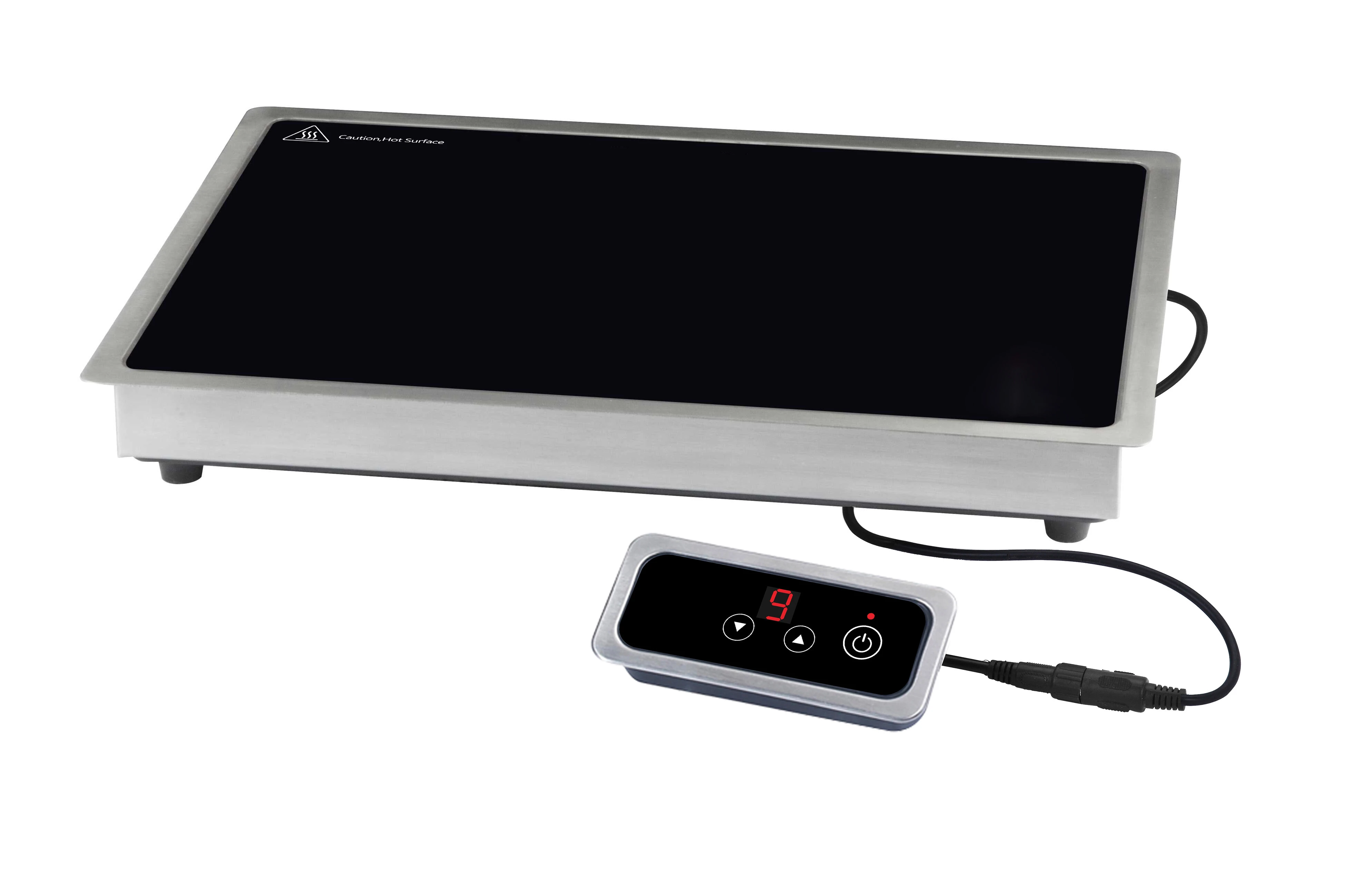
Product features also provide context for testing. The BF100A-B from Better Induction features a stainless steel body, touch control, and glass hob options, including Schott Ceran and Eurokera France. It is especially intended for keeping-warm applications and includes electronic overheating protection.
These specifications describe construction and intended use rather than verified efficiency. Warming trials should examine input consumption, temperature stability, cookware selection, and operating duration. Measured results still require appropriate uncertainty estimates.
Which Documents Support Credible Claims?
Buyers should request test procedures, calibration records, raw measurements, and uncertainty calculations. These documents allow engineering teams to review how reported figures were obtained. Missing information can limit the usefulness of an efficiency comparison.
Reports should also identify the uncertainty coverage basis and relevant operating conditions. When evaluating different suppliers, consistent documentation helps distinguish actual performance differences from measurement variation.
Better Decisions Begin with Clear Measurements
Measurement uncertainty gives precise efficiency claims their necessary context. It helps buyers understand testing limitations, interpret small differences, and evaluate results against practical operating requirements. Reliable comparisons depend on transparent methods rather than decimal places alone.
At Better Induction, we provide ODM and OEM services covering induction product design, development, and manufacturing. As an induction manufacturing partner, we encourage customers to define testing requirements early. Clear performance criteria and supporting measurements help both parties discuss product specifications with greater technical clarity.
GET IN TOUCH
Contact With us